
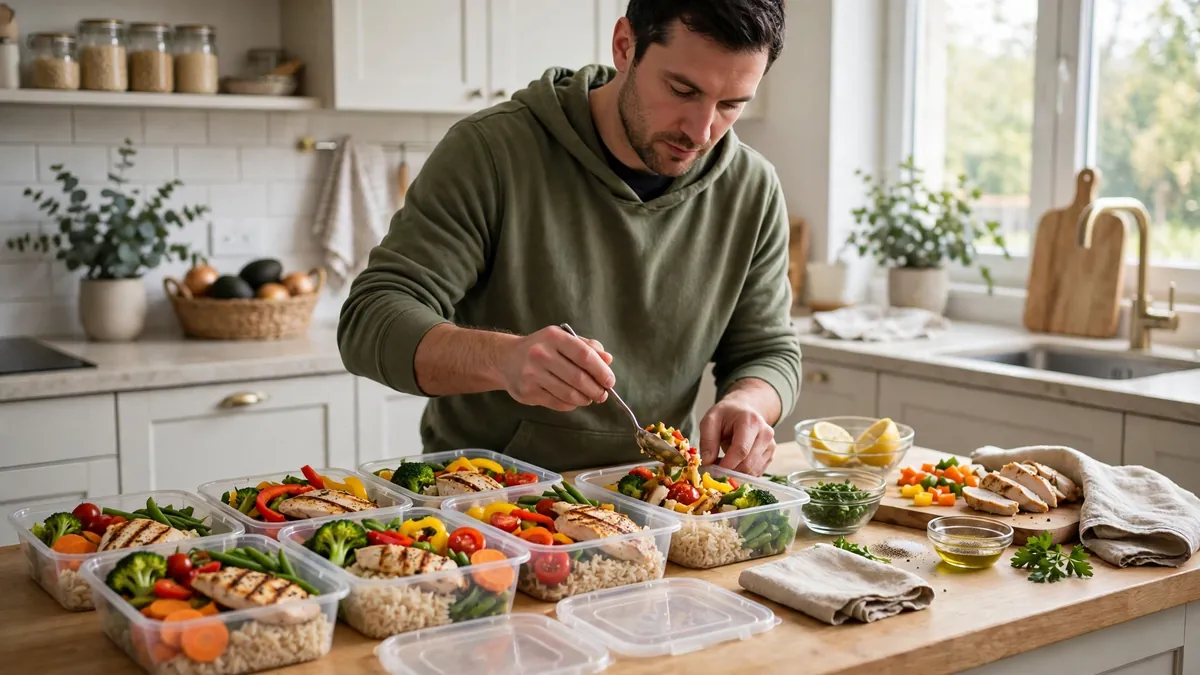
Healthy Meal Prep for Men: Beginner’s Guide Australia
Healthy meal prep for men has a reputation problem. Too many blokes picture a Sunday spent boiling plain chicken breast and eating the same grey Tupperware five days straight. Done properly, meal prep looks nothing like that — it is simply cooking once and eating well several times, using ingredients you actually enjoy, and arriving home from work knowing dinner is already sorted. This beginner’s guide covers the whole thing: what to buy, how to cook a week’s lunches in about 90 minutes, the food safety rules that keep it safe, and enough variety that Friday’s lunch still tastes like something you want to eat.
The payoff is real. Men who plan their meals tend to eat more vegetables, spend less on takeaway and waste less food. In a country where the average Aussie man eats well below the recommended vegetable serves, that is no small thing. Let us build the habit from scratch.
Why Healthy Meal Prep for Men Works Particularly Well
Most men do not fail at healthy eating because they lack willpower. They fail because hunger arrives at 12:30 pm in a food court, or at 7 pm after a long day, and the convenient option wins. Meal prep removes the decision from the moment of hunger. When the fridge already contains something good, willpower never has to show up.
There is also a maths argument. A $15 to $18 takeaway lunch, five days a week, costs roughly $3,900 a year. A week’s worth of home-prepped lunches typically costs $40 to $60 in groceries — about $2,600 a year. That is a holiday’s worth of savings, plus better food. And because you cook in bulk, each session costs you one block of time rather than five daily hunts for food.
The Gear: What You Actually Need
Forget the influencer kitchen. A beginner needs surprisingly little:
- Containers: a set of 6 to 8 microwave-safe, leakproof containers (around 750 ml to 1 litre each). Glass lasts longer and reheats better; BPA-free plastic is lighter for the work bag. Either is fine.
- One big tray and one big pot: a large baking tray for roasting and a stockpot or large saucepan for grains. Batch cooking is about surface area and volume.
- A sharp knife and a big chopping board: half of meal prep is chopping. A blunt knife makes it miserable.
- A food thermometer (optional but smart): takes the guesswork out of chicken and mince. We will cover target temperatures below.
- Labels or a marker: date every container. Future-you will thank present-you.
You do not need a rice cooker, an air fryer or a slow cooker to start — though all three earn their place later if you get into it. Start with what you have: healthy meal prep for men is about the habit, not the hardware.
The Golden Rules of Food Safety
This is the unglamorous section that keeps you out of trouble. Healthy meal prep for men lives or dies on food safety: prepped food sits in your fridge for days, so safety is not optional — it is the whole game.
- Cool it fast: get cooked food into the fridge within two hours of cooking (sooner in an Australian summer). Divide big pots into shallow containers so they cool quickly rather than sitting warm in the middle.
- Fridge life: most cooked meals keep 3 to 4 days refrigerated. If you prep on Sunday, plan to eat the last of it by Wednesday or Thursday — or freeze half on day one and defrost midweek.
- Freezer life: cooked meals freeze well for 2 to 3 months. Label with the dish and the date.
- Reheat once, properly: reheat until steaming hot all the way through (above 75°C in the centre). Only reheat what you will eat.
- Rice deserves respect: cooked rice can harbour Bacillus cereus spores that survive cooking. Cool rice quickly, refrigerate within an hour, and eat within a day or two. Never leave rice sitting on the bench.
- Raw and cooked stay separate: keep raw chicken away from ready-to-eat foods, wash boards and knives between jobs, and wash your hands. Basic, but it is where most home food poisoning starts.
Food Standards Australia New Zealand publishes detailed guidance on safe food handling at home — NSW Health’s food storage guidelines are also worth a read if you want the full picture on temperatures, cooling and the 2-hour/4-hour rule.
The 90-Minute Sunday Session: Your First Plan
Here is a complete beginner session. It makes five lunches and covers most of your dinners’ side dishes too. Total active time: about 90 minutes, with the oven doing half the work.
The menu
- Protein: tray-baked chicken thighs with smoked paprika and garlic
- Grain: brown rice (or a brown rice and quinoa mix)
- Roasted vegetables: pumpkin, capsicum, zucchini and red onion with olive oil
- Fresh crunch: a bag of baby spinach and cherry tomatoes to add at serving time
- Sauce: a simple yoghurt-tahini dressing to stop it tasting like day three
The method, in order
Minute 0-10: Preheat the oven to 200°C. Put the rice on — it takes the longest and needs no attention. Line a big tray with baking paper.
Minute 10-25: Chop all the vegetables into rough chunks. Toss with olive oil, salt, pepper and the paprika. Spread on the tray — give everything space, or it steams instead of roasting.
Minute 25-35: Season the chicken thighs (salt, pepper, smoked paprika, garlic powder, a squeeze of lemon) and add them to the tray or a second tray. Into the oven.
Minute 35-60: While everything roasts, whisk the dressing: Greek yoghurt, tahini, lemon juice, garlic, water to thin. Wash up. Portion the cooked rice into containers once it is done and has cooled slightly.
Minute 60-90: When the chicken and veg come out, rest the chicken five minutes, then slice. Divide everything across five containers: rice, veg, chicken. Cool 20-30 minutes on the bench (no longer), lid on, into the fridge. Add spinach and tomatoes fresh each day so they stay crisp.
That is five lunches for roughly $50 to $60 in groceries, each with a solid 30-plus grams of protein, fibre from the veg and wholegrains, and actual flavour from the dressing. Swap the protein weekly — beef mince, salmon fillets, pork strips, chickpeas — and the formula never gets boring.
Building a Week: The Mix-and-Match Formula
Once the basic session feels easy, stop following recipes and start following the formula. Every good healthy meal prep for men bowl has four parts:
- 1. A protein (palm-sized serve): chicken, beef, pork, fish, eggs, tofu, tempeh, lentils, chickpeas
- 2. A wholegrain or starchy base (a fist-sized serve): brown rice, quinoa, wholegrain pasta, sweet potato, corn, wholegrain wraps
- 3. Two or three vegetables (half the container): anything roasted, steamed or raw that you will actually eat
- 4. A flavour bomb: a sauce, dressing, salsa or spice mix — this is what separates meal prep you enjoy from meal prep you endure
Rotate one element each week and it feels like a new menu. Same chicken, but swap rice for sweet potato and tahini dressing for salsa verde, and Monday tastes different. Keep three or four sauces in rotation — peanut-lime, yoghurt-herb, salsa, soy-ginger — and boredom never sets in. Our healthy breakfast guide covers the morning side of the week if you want to prep those too.
Breakfast and Snacks: The Easy Wins
Lunches get the glory, but breakfasts and snacks are where most men’s weeks quietly fall apart. Two preps that take almost no effort:
- Overnight oats (5 jars, 10 minutes): rolled oats, milk or yoghurt, chia seeds, frozen berries, a spoon of peanut butter. Into the fridge. Grab and go all week — each jar delivers fibre, protein and actual staying power, unlike a servo muffin.
- Snack boxes: boiled eggs, cheese cubes, cherry tomatoes, carrot sticks with hummus, a handful of nuts, an apple. Prep five small containers on Sunday and the 3 pm vending machine loses its power over you. More ideas in our healthy work snacks roundup.
What About Dinners?
Most beginners prep lunches only, and that is the right call — it is where the money and the food-court temptation live. For dinners, a lighter-touch approach works: cook double every time you make dinner, and tomorrow’s lunch (or a freezer stash) takes care of itself. A slow cooker or a big Sunday cook-up of bolognese, curry or chilli gives you three or four dinners for the effort of one. Chilli con carne, in particular, is the unsung hero of meal prep: cheap, high in protein and fibre, freezes brilliantly, and tastes better on day two.
Common Beginner Mistakes
- Prepping food you do not like. If you hate reheated broccoli, do not prep reheated broccoli. Prep food you look forward to, or the habit dies in week two.
- No sauce. Dry chicken on dry rice is a punishment, not a lunch. Always include a dressing, salsa or sauce — it is the difference between compliance and enjoyment.
- Prepping seven days at once. Food quality drops after day four. Prep Sunday for Monday to Wednesday, and either freeze Thursday-Friday portions or do a quick 20-minute Wednesday top-up.
- Ignoring the freezer. Your freezer is a time machine. Double every batch, freeze half, and within a month you have a rotating stash of emergency meals.
- All or nothing. Prepping three lunches is infinitely better than prepping zero. Start small and build.
Shopping Smart: The Aussie Meal Prep List
A typical weekly shop for healthy meal prep for men, from Coles or Woolworths, looks like this: 1 kg chicken thighs, 1 kg brown rice (lasts weeks), a butternut pumpkin, 3 capsicums, 3 zucchinis, 2 red onions, baby spinach, cherry tomatoes, Greek yoghurt, tahini, lemons, eggs, rolled oats, frozen berries, peanut butter, hummus, nuts and a few tins of chickpeas or beans for variety. Buy vegetables in season — they are cheaper and taste better — and check the marked-down section for meat to freeze.
If even this feels like too much, there is no shame in a hybrid approach: prep breakfasts and snacks yourself, and use a meal delivery service for lunches or dinners while you build the habit. The goal is eating well consistently, not culinary martyrdom.
The Wednesday Top-Up: 20 Minutes to Finish the Week
Sunday’s prep covers Monday to Wednesday. Rather than letting Thursday and Friday slide into takeaway, a tiny midweek session keeps the streak alive. It is deliberately minimal — you are topping up, not re-cooking.
The 20-minute Wednesday plan: while the kettle boils, put eggs on for boiled eggs (10 minutes, makes 4). Throw a tray of chopped vegetables and pre-marinated chicken strips in the oven (15 minutes at 200°C). Cook a pot of two-minute noodles’ worth of rice or warm through leftover grains. Portion into two containers with last night’s dinner stretched across them. Done — Thursday and Friday lunches sorted for about $15 in extra groceries.
Alternatively, Wednesday is freezer-stash day: pull two containers from the freezer meals you banked in previous weeks and move them to the fridge to defrost overnight. This is the compound interest of meal prep — every double-batch you froze in past weeks pays out now. Men who run the Sunday-plus-Wednesday rhythm of healthy meal prep for men rarely eat takeaway lunches at all, not through discipline but because the alternative is already waiting.
FAQs
How long does meal prepped food last in the fridge?
Most cooked meals keep 3 to 4 days in the fridge. Prep Sunday for Monday to Thursday at the latest, and freeze anything meant for later in the week. Always cool food within two hours of cooking and reheat until steaming hot.
Is meal prep actually cheaper than buying lunch?
Yes, substantially. A home-prepped lunch typically costs $8 to $12 in groceries versus $15 to $18 for takeaway. Over a working year that is a saving of roughly $1,500 to $2,000, before counting the health benefit of controlling ingredients and portions.
What is the easiest meal prep for a complete beginner?
The tray-bake formula: one protein and chopped vegetables roasted on a tray while rice or another grain cooks on the stove. It needs one tray, one pot, minimal skill, and produces five lunches in about 90 minutes. Add a sauce and it stays interesting all week.
Can you meal prep without eating the same thing every day?
Yes — cook components, not finished meals. Prep a protein, a grain, roasted veg and two sauces separately, then combine them differently each day. Or prep three lunches and cook fresh twice. Variety is a strategy choice, not a talent.
Is reheated rice safe?
Yes, if handled properly. Cool cooked rice quickly, refrigerate within an hour, eat within a day or two, and reheat until steaming hot. Rice can harbour bacteria whose spores survive cooking, so it should never sit at room temperature for hours.
Disclaimer: This article is general information only. Follow safe food handling practices, and if you have a medical condition, food allergy or specific dietary requirements, check with your GP or an Accredited Practising Dietitian before making major changes to how you eat.