Articulatio Atlantooccipitalis Explained 2026
late January in Abbottabad always has that perfect mix of sunshine and chill—around 10–12°C this time of morning, right? If you’re at your desk or maybe curled up with a laptop, do you ever get that creeping tightness at the very top of your neck? That little joint doing most of the heavy lifting (and sometimes the complaining) is the articulatio atlantooccipitalis—the spot where your skull sits on your spine.
It’s what lets you nod “yes” when someone offers chai or tilt your head to watch the light change on the mountains. We almost never notice the articulatio atlantooccipitalis until it starts acting up—maybe after a night on a lumpy pillow, hours of forward-leaning screen time, or one of those bumpy rides on the roads around here. Let’s talk about it the way friends do over a warm drink: what this joint really is, how it keeps your head moving comfortably, what tends to upset it, and some easy, realistic ways to keep it feeling good through these cooler months.
Key Takeaways
- The articulatio atlantooccipitalis is basically your nodding joint—giving you about 25 degrees of smooth up-and-down rocking so “yes” feels completely natural.
- Strong ligaments hold everything steady like built-in safety straps, but a serious jolt (car accident, bad fall) can tear them—yet newer medical approaches mean way more people come through okay with fast scans and the right care.
- A few people are born with a bit of fusion in this area, which can quietly add up to stiffness or headaches as the years pass.
- Plenty of injuries heal without surgery these days—just a good collar and patience—if caught before things get too unstable.
- Little daily adjustments like sitting taller and doing soft chin tucks stop a lot of that annoying tightness from building up, especially when we spend more time indoors.
What the Articulatio Atlantooccipitalis Really Is
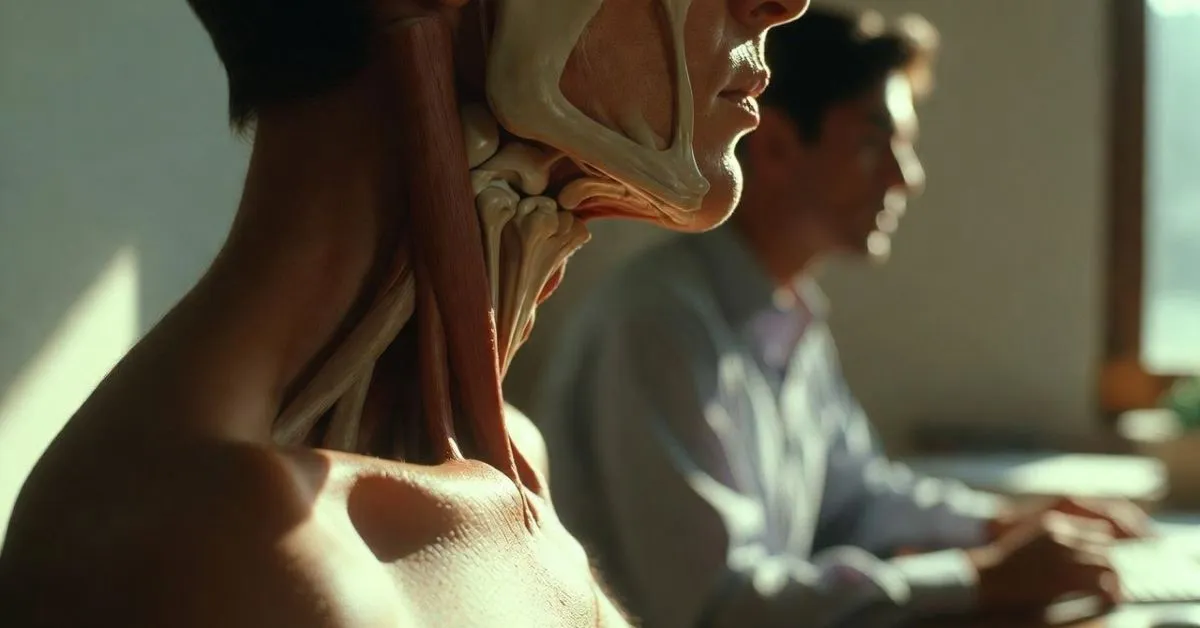
Think of your head as a ball balanced on a stand. The articulatio atlantooccipitalis is the cushioned meeting point: two rounded bumps on the base of your skull (occipital condyles) rest in shallow, curved sockets on top of the atlas—the first neck bone, C1.
It’s a paired joint (one on each side) lined with slippery fluid so everything glides smoothly. That rocker-like shape is perfect for tilting your head forward and back while keeping sideways movement limited and safe. The whole area sits at what’s called the craniovertebral junction—the critical link between brain and spine—with the large foramen magnum opening nearby for the spinal cord and the arteries supplying your brain.
This joint takes shape early in development from simple tissue. Usually it forms just right, but sometimes the atlas partially fuses to the skull bone (a variation known as assimilation). Research notes this happens more often in Asian populations and can make the neck feel subtly less flexible over time.
Ever roll out of bed and feel like your head is stuck facing one direction? That’s almost always the articulatio atlantooccipitalis telling you it spent hours in a funny position.
The Ligaments Keeping the Articulatio Atlantooccipitalis Steady
Your head weighs about 4–5 kg—like a small bag of rice you carry everywhere. Without anchors it would tip constantly. Ligaments are the anchors—tough bands and sheets that hold things firmly in place.
Alar ligaments act like side guy-wires, stopping excessive twisting. The tectorial membrane stretches across the back like a wide, strong strap to block backward slips. Thinner front and back membranes wrap around to add closeness and extra security.
The joint right below (C1–C2) handles most of the side-to-side “no” rotation. The articulatio atlantooccipitalis specializes in the nodding motion, so the two share the daily work and avoid wearing one spot out too quickly.
Interesting little fact: roughly 20% of people don’t have a small extra ligament (the apical one) at all, but their joint stays completely stable—the bone curves and main ligaments simply take over without any trouble.
How the Articulatio Atlantooccipitalis Powers Everyday Movement
Nodding is its main job—around 25 degrees total, roughly half looking down and half tilting back up. There’s also a modest side tilt (5–8 degrees each direction) and only about 5 degrees of rotation.
Imagine driving toward Kalam and glancing up at the tall pines—that gentle upward motion mostly comes from the articulatio atlantooccipitalis. Or dipping your chin to sip tea or read a text—it happens effortlessly because of this joint.
It also quietly cushions the small jolts of daily life: walking on uneven ground, carrying groceries up steps, even laughing hard with friends. When it tightens, your head starts feeling heavier or your balance a little off-kilter. Keeping it gently mobile prevents that feeling from settling in.
When the Articulatio Atlantooccipitalis Gets Into Trouble
The most serious issues usually follow big impacts—a high-speed stop, fall, or bad accident. Atlanto-occipital dislocation (AOD) happens when the joint pulls apart. It appears in about 20% of severe trauma cases. Older statistics showed very high mortality (over 60%), but recent case series and studies (2024–2025) show clear improvement—survival frequently reaching 50–92% when people get rapid CT/MRI and appropriate treatment.
Normal aging adds its own gradual changes. The smooth surfaces thin slightly, ligaments lose a bit of spring, and your sense of head position weakens. Forward head posture—very common when hunched over a laptop or phone during long indoor days—puts extra stress on the articulatio atlantooccipitalis and often triggers headaches that start right at the base of the skull.
Some people have natural variations from birth—like partial fusion—that can press on nearby nerves or connect to things like Chiari malformation (brain tissue extending a little too low), sometimes causing arm tingling, weakness, or steady neck discomfort. Kids’ necks are especially vulnerable in accidents.
How Doctors Find and Handle Problems Today
After any significant jolt, doctors go straight to imaging. MRI highlights ligament tears that plain X-rays miss; CT catches even tiny bone shifts.
Treatment has become much less aggressive for many cases. Stable injuries often heal well with only a rigid collar—no cutting required. When instability is present, fusion surgery locks the area securely, and newer reports show excellent fusion rates and recovery.
Speed makes the biggest difference. If your neck is screaming after a rough moment, ask for complete scans—it can protect your long-term comfort and function.
Practical, Everyday Ways to Care for Your Articulatio Atlantooccipitalis
Posture is the easiest starting point: ears over shoulders, chin gently tucked. Every hour, lift your shoulders toward your ears, roll them back slowly, and breathe deeply—it melts built-up tension in moments.
Chin tucks work wonders: sit or stand tall, slide your chin straight back (like making a soft double-chin), hold 3–5 seconds, repeat 8–10 times. Do 2–3 sets daily. This gently encourages the articulatio atlantooccipitalis to move more freely and strengthens the small supporting muscles.
Add gentle side tilts: bring one ear toward the shoulder (keep shoulder down), hold 10–15 seconds each side. Follow with small, controlled nods forward and back. A warm towel or hot pack on the neck base feels especially comforting on cold mornings.
Seatbelts are essential—they cut whiplash forces dramatically and protect this joint from sudden shocks.
One documented example from recent reports: a person with fairly severe AOD recovered mostly with collar support and careful rest—no major surgery. It shows simpler paths can succeed when the injury allows.
Gentle Care vs Surgery—Which Makes Sense?
For everyday tightness or stable injuries, starting with a collar and light movement usually brings people back to normal faster with fewer risks. Surgery (fusion) is reserved for cases where instability threatens nerves or the spinal cord. Current evidence shows good results for both when chosen thoughtfully.
Have an open conversation with a spine or orthopedic specialist. They’ll review your scans, hear your symptoms, and help pick the approach that fits your life best.
Final Thoughts
Your articulatio atlantooccipitalis quietly powers every nod, glance, and head turn—from agreeing over family stories to taking in the peaceful Abbottabad views. Give it consistent little attentions: good posture, those chin tucks, and prompt care if pain lingers after a bump or long day. Steady small habits keep your neck feeling loose and comfortable no matter how cold or busy the season gets.
If your neck’s been grumbling lately—maybe from winter posture, extra screen time, or a recent rough ride—tell me more. I’m happy to brainstorm starting points or questions to ask your doctor.
FAQs On articulatio atlantooccipitalis
What is the articulatio atlantooccipitalis?
It’s the joint where your skull base meets the top neck bone (atlas or C1). Two rounded bumps on the skull rest in shallow cups on the atlas, allowing smooth rocking for nodding. This paired synovial joint has fluid for easy gliding. It balances stability with flexibility for daily head movements. When irritated, even small motions can feel stiff or sore.
What ligaments hold it together?
Alar ligaments prevent too much twisting, the tectorial membrane braces the back, and front/back membranes keep bones close. A small apical ligament is missing in ~20% of people without issues. These bands keep alignment during motion. Damage causes instability—why trauma here needs fast attention.
What movements does it handle?
Primarily nodding—about 25 degrees total (chin down and head up). It allows 5–8 degrees side tilt and ~5 degrees rotation. This makes “yes” natural while “no” comes mostly from below. Good range supports driving, reading, and balance. Stiffness shows as restricted head motion.
How does aging change this joint?
Surfaces wear thinner, ligaments stiffen, and head-position sense weakens. That brings more stiffness, base-of-skull headaches, or slight unsteadiness. Forward posture speeds it up. Gentle stretches and posture fixes slow the process—many over 50 feel much better with daily habits.
What is atlanto-occipital dislocation?
Serious injury from major force (crash, fall) tearing the joint and separating skull from spine. It appears in ~20% of severe trauma, with historical mortality over 60%. Survival now often reaches 50–92% thanks to quick imaging and care. Fast diagnosis prevents cord/brain damage; treatment ranges from collar to fusion.
Can problems here cause headaches?
Yes—many neck-triggered (cervicogenic) headaches start from strain or misalignment in the articulatio atlantooccipitalis. Posture issues, past jolts, or fusions irritate nerves. Pain often hits the back of the head or eyes. Gentle movement or manipulation relieves it for many without drugs. Early fixes prevent it from becoming chronic.