
Trades for Men That Pay Well in 2026
Looking for trades for men that pay well? See the highest-paying options in 2026—no college degree needed. Learn salaries, entry steps, growth trends, and real ways to start earning strong money fast.
You’re sitting at the kitchen table, staring at bills, wondering if there’s a better path than another four years of college loans. Or maybe you’re young, finishing high school, and the idea of office work Trades for Men That Pay Well doesn’t feel right. You want solid pay, real skills, and work that actually matters. That’s where skilled trades come in. Right now, in 2026, many trades for men offer strong salaries—often $80,000 to over $100,000 once you gain experience—without the debt or desk life.
These jobs stay in demand because buildings need wiring, pipes need fixing, homes need heating and cooling, and renewable energy projects keep growing. The best part? You can start earning while you train through apprenticeships instead of paying tuition.
Here are the main points you’ll take away:
- Plenty of trades pay six figures with experience, and many start you at $40,000–$60,000 right after Trades for Men That Pay Well.
- No four-year degree required—most paths use paid apprenticeships or short trade school programs.
- Fields like renewable energy and electrical work are growing fastest, offering long-term job security.
- Union jobs often add better pay, health benefits, and pensions compared to non-union roles.
- Physical work comes with challenges, but smart choices like safety gear and specialization make careers sustainable.
What Are High-Paying Trades?
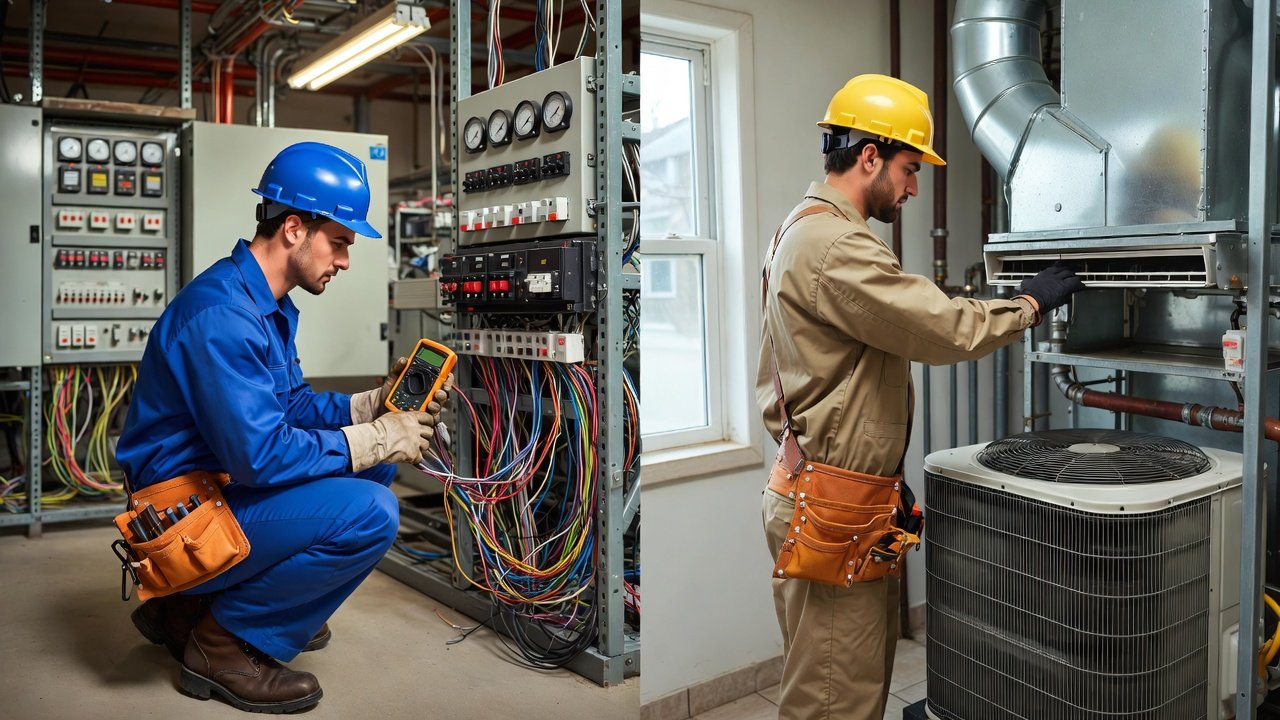
High-paying Trades for Men That Pay Well are skilled, hands-on jobs that need training but not a bachelor’s degree. Think electrician running wires in new buildings, plumber installing systems, or HVAC tech keeping offices comfortable. These roles are often male-dominated historically, though more women are joining every year.
For many men, Trades for Men That Pay Well feel right because they offer independence, problem-solving every day, and visible results. You finish a job and see the impact—lights turn on, water flows, a house stays warm. Compared to entry-level office jobs that might start at $40,000 with debt, trades frequently pay more sooner.
The biggest draw in 2026 is stability. Infrastructure projects, housing shortages, and the push for clean energy mean constant work. BLS data shows shortages in many trades, which pushes wages higher.
Top Trades That Pay Well
Here are some of the strongest options right now, based on recent BLS numbers and job market reports.
- Elevator and Escalator Installers/Repairers — Median around $99,000–$106,000. Top earners clear $130,000+. Growth is steady because cities keep building high-rises.
- Boilermakers — Around $66,000 median, but experienced workers hit $100,000+ with overtime on industrial projects.
- Electricians — Median $61,000–$90,000+, journeymen and masters often reach $100,000+ in commercial or industrial work.
- Plumbers, Pipefitters, Steamfitters — Median $61,000–$95,000+. Specializing in gas lines or large commercial jobs pushes pay higher.
- HVAC Technicians — Median $57,000–$75,000+, with energy-efficiency specialists earning more as green standards rise.
- Wind Turbine Technicians — Median around $60,000, but rapid 50% projected growth makes it one of the fastest-rising trades.
- Solar Photovoltaic Installers — Around $48,000 median, but 42% growth and specialization in large-scale farms boost earnings quickly.
- Construction Managers — Median $101,000. Many start in trades and move up after years of field experience.
Overtime, union rates, and location make big differences. In high-demand areas like California or Texas, experienced tradespeople regularly clear six figures.
Entry Requirements
You don’t need a degree to break in. Most Trades for Men That Pay Well follow one of these paths:
- Apprenticeships — 4–5 years of paid on-the-job training plus classroom time. You earn from day one, often $15–$25/hour starting.
- Trade School — 6 months to 2 years for certifications. Costs range from $5,000–$15,000, but many programs offer financial aid or employer sponsorship.
- Helper/Entry Roles — Start as a laborer or helper, learn on site, then move into formal training.
For licensing (required in most states for electricians, plumbers, HVAC), you pass exams after required hours. Unions like IBEW (electricians) or UA (plumbers/pipefitters) run excellent paid apprenticeship programs.
If you have zero experience, apply to local union halls or community colleges. Many offer pre-apprenticeship programs to get your foot in the door.
Salary and Job Outlook
Starting pay usually lands between $40,000–$60,000 depending on region and trade. After journeyman status (typically 4–5 years), earnings jump significantly.
Experienced workers in union roles frequently add 20–50% through overtime, night differentials, and benefits. Self-employed tradespeople can earn even more by running their own crews.
Job outlook remains excellent. BLS projects strong growth through 2034 in renewable energy trades. Traditional trades like plumbing and electrical stay steady because people always need water, power, and climate control.
In 2026 the renewable push—solar farms, wind projects, EV charging stations—creates thousands of new openings every year.
Benefits of Trades for Men That Pay Well Careers
Trades for Men That Pay Well offer advantages many college paths can’t match.
- No massive student loans hanging over you.
- Paid training instead of paying for school.
- Union jobs often include health insurance, retirement plans, and paid leave.
- Opportunity to own your business later—many plumbers and electricians become contractors and earn six figures running teams.
- Work that feels meaningful: you solve real problems every day.
Shortages mean employers compete for good workers, leading to signing bonuses and higher starting rates in many areas.
Challenges in Trades
The work is physical. You lift heavy tools, work in tight spaces, climb ladders, and sometimes face extreme heat or cold. Injury risk exists, though proper safety training and gear reduce it a lot.
Hours can be irregular—on-call shifts for plumbers, early starts on construction sites. Travel is common for big industrial or renewable projects.
Licensing exams take study time, and apprenticeship waitlists exist in popular areas. Burnout happens if you don’t set boundaries or specialize in less demanding niches (e.g., residential vs. heavy industrial).
Many overcome these by joining strong unions for protections, choosing safer specializations, and planning for eventual management or ownership roles.
Trades for Men That Pay Well. Other Careers
Compare trades to a typical four-year degree path. A college grad might start at $45,000–$60,000 with $30,000+ in debt. Trades for Men That Pay Well apprentice earns while learning and reaches similar or higher pay in half the time.
Against tech or office jobs, Trades for Men That Pay Well offer higher immediate earning potential for hands-on people, though less remote flexibility. Union trades often match or beat white-collar benefits packages.
Union vs. non-union makes a difference too. Union roles usually pay 20–30% more, offer better job security, and include pensions—worth considering early.
How to Get Started
Here’s a simple plan:
- Pick 2–3 trades that interest you (research local demand in your area).
- Contact your state’s apprenticeship office or union halls (IBEW, UA, etc.).
- Apply for pre-apprenticeship or helper positions to gain experience.
- Enroll in trade school if you want faster classroom training.
- Study for licensing exams once you hit required hours.
Many men start as helpers at 18–20, become journeymen by 23–25, and earn strong money by their late 20s. Others switch careers in their 30s and thrive.
Final Takeaway Trades for men that pay well are one of the smartest paths right now—no huge debt, real skills, and solid income potential. Pick one trade that excites you, reach out to a local apprenticeship program this month, and start building a future you control. You’ve got this.
Frequently Asked Questions
What trades pay the most for men?
Elevator and escalator installers lead with medians around $100,000–$106,000. Boilermakers, experienced electricians, and construction managers also regularly reach or exceed $100,000 with overtime and specialization.
Do trades require a degree?
No. Trades for Men That Pay Well rely on apprenticeships (paid on-the-job training) or short trade school programs (6 months to 2 years). You earn money while learning instead of paying for college
What Trades for Men That Pay Well are in demand in 2026?
Renewable energy roles like wind turbine technicians (50% growth) and solar installers (42% growth) lead. Traditional trades—electricians, plumbers, HVAC techs—stay strong due to ongoing infrastructure and housing needs.
Are Trades for Men That Pay Well recession-proof?
Yes, core trades like plumbing, electrical, and HVAC remain essential. People always need repairs and installations, and shortages keep demand high even during economic slowdowns.
How to start in trades without experience?
Begin as a helper or laborer on job sites. Apply to union apprenticeship programs for paid training. Many offer pre-apprenticeship classes to build basic skills and improve your chances of acceptance.
What are challenges in trade jobs?
Physical demands, risk of injury, and irregular hours are common. Use proper safety equipment, choose safer specializations, and join unions for better protections and work-life balance support.