Sleep Hygiene for Shift Workers in Australia: A Practical Guide
Nurses, ambos, miners, truckies, bakers, security guards — just over 15% of Australians work shifts, according to the Sleep Health Foundation, and almost all of them sleep worse than they should. Not because they are doing sleep wrong, but because their roster is fighting their body clock. This guide covers sleep hygiene shift workers Australia-wide can actually stick to: the anchor-sleep method, a bedroom that works at midday, light and caffeine timing, and a plan for days off — written for rotating rosters, 12-hour nights and FIFO swings, not for people who work nine to five.
In short: protect one anchor sleep block that overlaps every roster, make the bedroom dark, cool and quiet, use bright light early in the shift and dodge it on the way home, cut caffeine well before day sleep, and keep days off close to the roster pattern. If you are falling asleep at the wheel or sleep stays broken for weeks, that is a GP conversation, not a hygiene problem.
Disclaimer: This is general information only, not medical advice. Sleep hygiene is routine advice for healthy adults; it is not a treatment for insomnia, sleep apnoea or any other sleep disorder. If poor sleep persists, or your role is safety-critical, talk to your GP or your employer’s health service.
Why Shift Work Fights Your Body Clock
Your body runs on a roughly 24-hour circadian rhythm, timed largely by light. It expects sleep at night and alertness during the day, and it does not renegotiate just because the roster says otherwise. Night shift asks you to work through your body’s deepest sleep window and then sleep through its strongest wake signals — daylight, noise, heat and a household running on daytime hours.
That mismatch explains the classic shift-worker pattern: trouble falling asleep after a night shift, waking after four or five hours and not getting back to sleep, and a brutal slump somewhere between 2am and 5am on shift. The Sleep Health Foundation notes that rotating to night work fragments and shortens daytime sleep and disrupts the sleep-wake clock — which is why shift workers so often run a chronic sleep debt even when they spend enough hours in bed.
You cannot delete the mismatch. What you can do is stop adding to it — and that, in practice, is what sleep hygiene shift workers Australia-wide are really doing: working with the clock they have, not the one the roster wishes they had. Almost every practical gain comes from four levers: when you sleep, how dark and quiet the room is, when you get light, and when you have caffeine. Get those four roughly right and most shift workers sleep noticeably better within a couple of roster cycles.
Sleep Hygiene Shift Workers Australia: Start With Anchor Sleep
The single most useful idea in shift-work sleep research is anchor sleep: one block of sleep, ideally four hours or more, that happens at the same time every day regardless of the roster. On night-shift days it might be the first hours after you get home; on days off it is the tail end of a normal night’s sleep. The overlap gives your body clock one fixed point to organise around, instead of a schedule that lurches by twelve hours every few days.
Around the anchor, top up to a total of seven to nine hours across the 24 hours. That might mean a main sleep straight after a night shift plus a nap before the next one, or one long day sleep if your household allows it. The Sleep Health Foundation’s consensus guidance for shift workers makes the same point from the other direction: keep sleep and wake times as regular as your roster allows, and use planned naps to fill the gap rather than crashing at random times.
That routine — the same anchor, the same wind-down, every roster — is the core of sleep hygiene shift workers Australia-wide can actually sustain. It survives roster changes because it does not depend on any single shift pattern. Tell the people you live with the anchor hours and treat them like a work meeting: phone off, door closed, no “quick questions”. Day sleep that gets interrupted three times is not really day sleep.
Before a run of nights, many workers also bank a pre-shift nap in the late afternoon or early evening. Ninety minutes before you leave, or even a short 20-minute nap, takes the edge off the first night — traditionally the hardest, because you have usually been awake since morning.
Build a Bedroom That Works at Midday
Day sleep fails on environment more than on willpower. Your bedroom at noon is bright, warm and loud; your bedroom at midnight is none of those. Closing that gap is the highest-value money and effort you can spend on sleep.
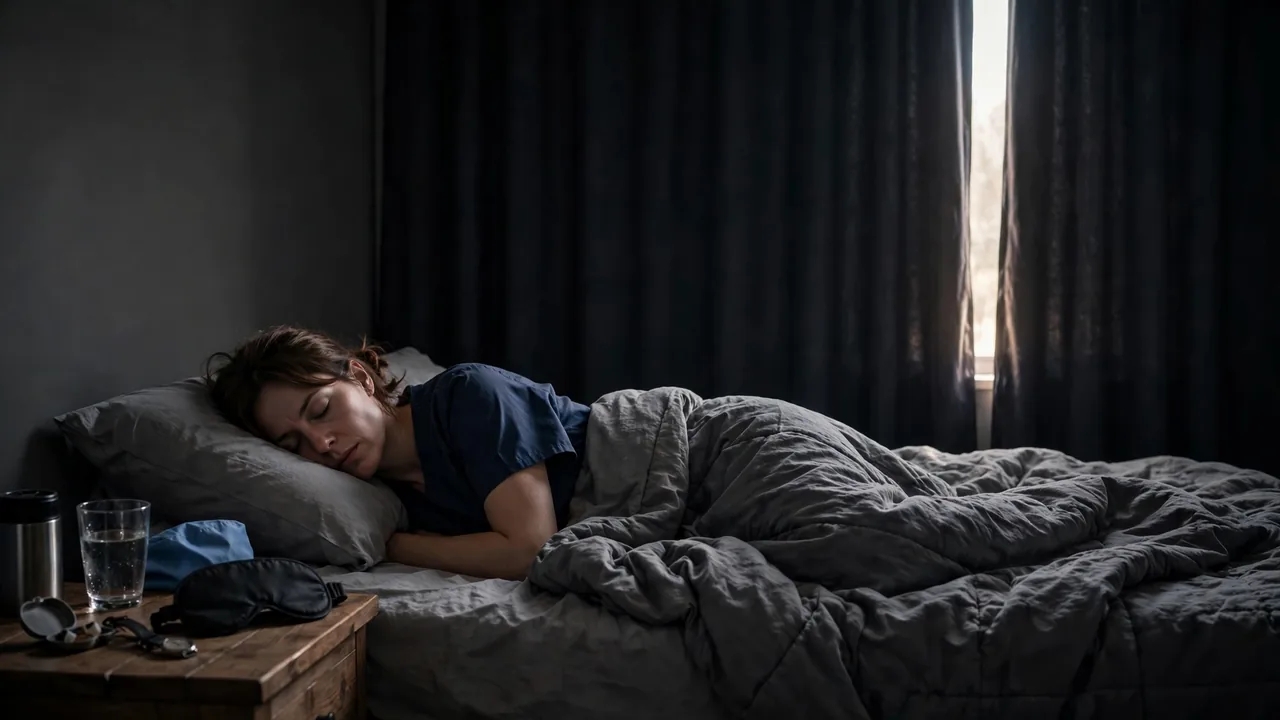
- Blackout first. Proper blackout curtains or blinds, sealed at the edges, plus an eye mask as backup. Even small light leaks tell your body clock it is daytime.
- Cool it down. Daytime rooms heat up. A fan, lighter bedding, or air-conditioning set cooler than you would use at night all help, because your body needs to drop temperature to sleep deeply.
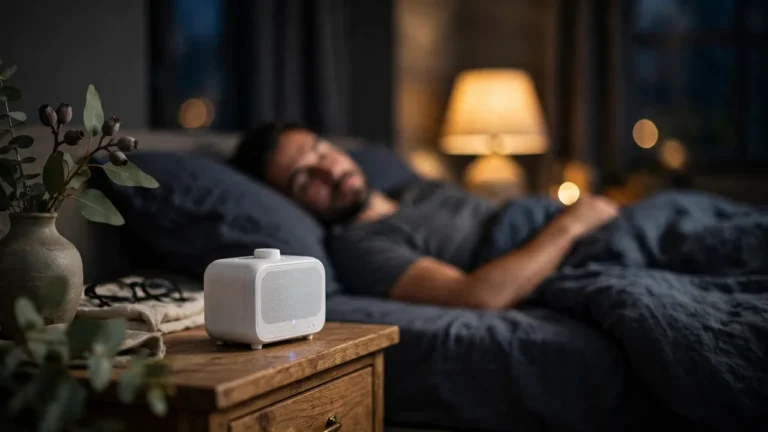
- Kill the noise. Earplugs, a door sign for the household, phones on Do Not Disturb — and steady background sound to mask what gets through. Our guide to the best white noise machines in Australia covers the options shift workers use to cover traffic, kids and neighbour noise.
- Time the wake-up. Waking mid-cycle leaves you groggy for the first hour of a shift. The Sleep Cycle Calculator helps you count back in 90-minute cycles from when you have to get up, whether that is 5pm or 5am.
FIFO workers get the harder version of this problem: a donga with a thin door, camp noise and a roommate schedule that may not match yours. The portable kit — eye mask, earplugs, your own pillowcase, a small fan or white-noise app — travels better than good intentions. If camp day sleep is consistently impossible, raise it through your site health team; it is a fatigue-management issue, not a personal failing.
Light: Your Strongest Lever
Light is the main signal that sets your body clock, so use it deliberately. Get bright light early in your shift — outdoors on the way in if there is any daylight left, or the brightest indoor light available — to push alertness into the working hours. On the commute home after a night shift, do the opposite: sunglasses on a bright morning are not a fashion choice, they are how you stop daylight from telling your brain the day is starting just before you need to sleep.
At home, keep the wind-down dim. Bright bathroom and kitchen light while you make a snack works against the sleep you are about to attempt. Then, when you wake, get light again as soon as you can — it anchors the wake end of the cycle the same way darkness anchors the sleep end.
None of this needs special equipment. It is timing, not gear: bright when the shift starts, dim on the way home, dark in the bedroom, bright again when you rise.
Caffeine, Food and the Nightcap Trap
Caffeine is a tool with a long tail. It lifts alertness for hours, which is exactly why the timing matters more than the amount for shift workers. The Sleep Health Foundation’s shift-work guidance is to be deliberate about it: use caffeine early in the shift if you need it, and stop several hours before your planned day sleep, or you will be lying in a blacked-out room with a wired brain. Energy drinks at 4am before a 7am bedtime are the classic own goal.
Eat on a pattern your stomach can learn. A main meal before or early in the shift, something light during the night rather than a heavy 2am feast, and a light breakfast before day sleep if you need one. Heavy meals in the middle of the night sit badly and fragment sleep; going to bed hungry does too.
And the nightcap — or in this case the morningcap. Alcohol feels like it helps you fall asleep, and it does shorten the time to drop off. What it actually does is lighten and fragment the sleep that follows, so you wake less restored. Using it as a day-sleep aid trades thirty easy minutes for hours of poorer sleep. If sleep will not come without it, that dependency is worth a GP conversation in its own right.
Sleep Hygiene Shift Workers Australia: Naps, Days Off and FIFO Swings
Naps work when they are planned. A short nap of around 20 minutes refreshes without dropping you into deep sleep; a longer nap of about 90 minutes completes a full cycle. The awkward middle — 45 to 60 minutes — is where sleep inertia lives: you wake from deep sleep feeling worse than before. On shift breaks, short is safer, and give yourself a few minutes to come around before safety-critical tasks or the drive home.
Days off are where most routines collapse. Sleeping in until midday “to catch up”, then staying up all night before an early start, re-creates jet lag every single week. The anchor sleep approach softens this: keep the anchor block, stretch the rest of your sleep around it, and you can have a social life on days off without fully flipping back to a day schedule your roster will destroy on Monday.
For FIFO swings, add two travel rules. Sleep as much as you can before the first night shift of a swing rather than arriving already in debt, and treat the first day home as a recovery day, not a family-events day. Swings are marathons; the workers who last build the boring routine and keep it on both ends of the swing.
When Sleep Hygiene Is Not Enough: See Your GP
Sleep hygiene fixes habits. It does not fix disorders, and shift workers carry higher rates of several. Book a GP appointment if any of these sound familiar: loud snoring with pauses in breathing or a partner who has noticed them, waking unrefreshed for weeks despite enough hours in bed, insomnia that persists beyond a few weeks, or — the red flag that overrides everything — drowsy driving. Nodding at the wheel, drifting lanes, or not remembering the last stretch of road means you are not safe to drive, full stop. Pull over, nap, and get the underlying problem assessed.
Our men’s sleep optimization guide covers the apnoea signs and testing pathway in more depth, and our evidence-based guide to sleeping better works through the general habits that sit underneath all of this. A GP can also review whether anything else — medication timing, thyroid, mood — is feeding the problem. That is a medical workup, and no article can substitute for it.
FAQs
How much sleep do shift workers actually need?
The same seven to nine hours across 24 hours as everyone else — it just rarely arrives in one block. Most shift workers split it into a main sleep plus a nap. Total hours and regularity beat the perfect single block you never achieve.
What is anchor sleep, in plain terms?
Keeping one sleep block at the same time every day — roster days and days off alike — so your body clock has a fixed point. It is the foundation of sleep hygiene shift workers Australia-wide use to handle rotating rosters without fully flipping their schedule each week.
Should I take melatonin or sleeping tablets for day sleep?
That is a conversation for your GP or pharmacist, not a self-prescription. Products sold for sleep vary widely in quality and suitability, some interact with other medicines, and needing them regularly is itself a sign the underlying problem needs assessing.
Is it better to sleep straight after a night shift or stay up?
For most people, sleeping soon after the shift and banking a longer block works better than staying up and crashing later — fatigue compounds through the morning. If you must be up for family or appointments, a shorter morning sleep plus a pre-shift nap is the usual compromise.
How long before day sleep should I stop caffeine?
Several hours — caffeine’s effects linger well past the alert feeling wearing off. The Sleep Health Foundation advises shift workers to avoid caffeine in the hours before planned sleep; experiment within that guidance to find your own cut-off, and write it into the routine like any other roster rule.
Keep Reading
Sleep is a system, and shift workers have to run it deliberately. These reads go deeper on the other parts.
- How to Sleep Better: An Evidence-Based Guide for Men — the general habits underneath every routine in this guide.
- Men’s Sleep Optimization — sleep apnoea signs and when testing is worth it.
- Best White Noise Machines Australia — masking daytime noise so day sleep survives the household.