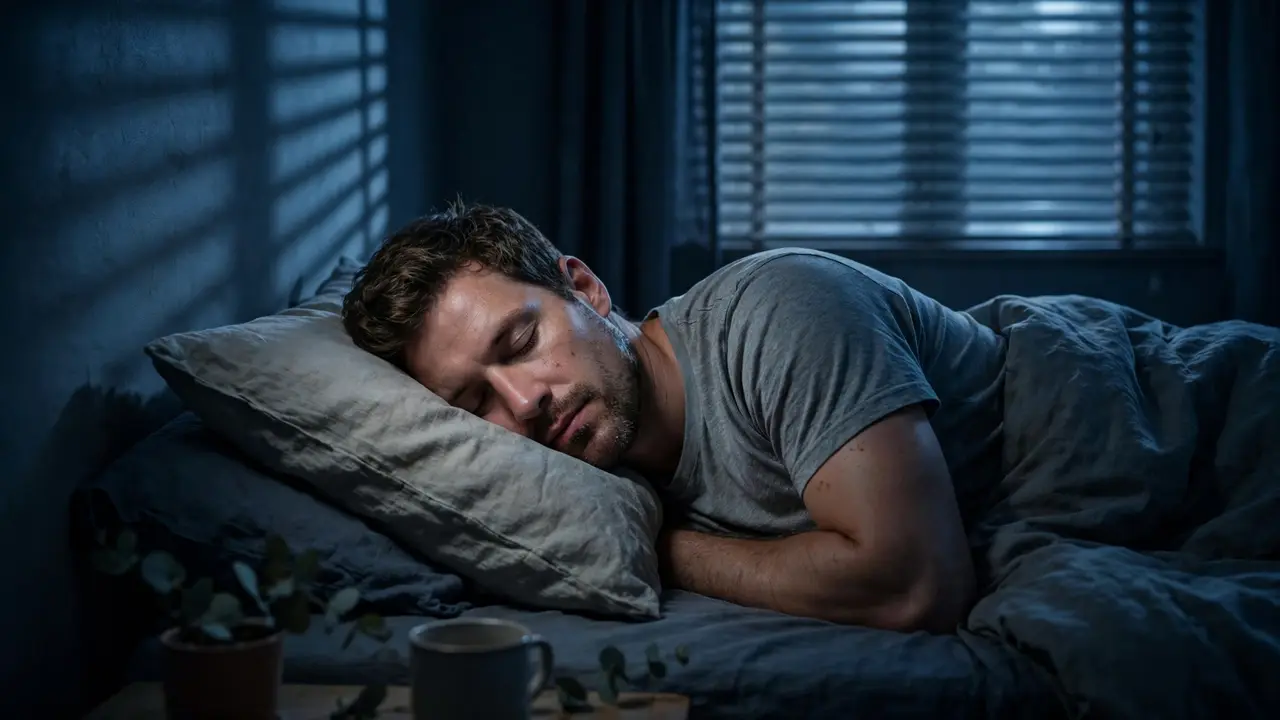
How to Sleep Better: An Evidence-Based Guide for Men
Ask a room full of blokes how they slept last night and you’ll get a chorus of shrugs, laughs, and “mate, I haven’t slept properly in years.” Poor sleep is so common among men that it’s treated as a joke — but learning how to sleep better is one of the highest-return health investments a man can make.
In short: keep a regular wake time, get morning light, cut caffeine after midday, keep the bedroom cool and dark, and skip the nightcap. If loud snoring, gasping or weeks of poor sleep persist, see your GP — habits are the starting point, not the whole answer.
Sleep affects everything: your mood, your patience, your weight, your blood pressure, your immune system, even your testosterone levels. And yet most sleep advice is either vague (“reduce stress!”) or buried in wellness fluff. This guide is different. It’s built on what sleep science actually says works — practical, evidence-based steps for men who want real rest.
Why Sleep Matters More Than You Think
During sleep, your brain consolidates memories, clears metabolic waste, regulates hormones, and resets your emotional reactivity. Men who consistently sleep less than seven hours show measurably worse decision-making, slower reaction times, and stronger emotional responses to stress the next day — which is a rough combination for work, driving, and relationships.
The physical stakes are serious too. Chronic short sleep is associated with higher blood pressure, increased cardiovascular risk, weight gain, impaired glucose regulation, and weakened immunity. For men specifically, research has linked poor sleep to lower testosterone levels and reduced libido. Sleep isn’t downtime; it’s maintenance. Skip the maintenance and things start breaking.
How Much Sleep Do Men Really Need?
The widely cited guideline for adults is 7 to 9 hours per night — and that applies to men as much as anyone. Some blokes genuinely function well on slightly less, and a few need more, but if you’re regularly getting under seven hours and relying on caffeine to function, you’re running a deficit.
Here’s the trap: sleep-deprived people are notoriously bad at judging their own impairment. Studies show that after several nights of short sleep, people rate their performance as fine while objective tests show it declining. If your partner says you’re irritable, your concentration is shot, or you’re dozing on the couch at 8pm, believe the evidence over your own assessment.
Why Men Sleep Poorly: The Usual Suspects
Before fixing sleep, it helps to know what’s breaking it. The most common culprits for men:
- Stress and mental replay: lying awake running through work problems, finances, or arguments. The brain treats bedtime as meeting time.
- Irregular schedules: shift work, late nights, and weekend lie-ins that scramble your body clock. Shift work is particularly brutal and disproportionately affects men in trades, transport, healthcare and emergency services.
- Screens before bed: phones, tablets and TV suppress melatonin and keep the mind activated. The content matters too — arguments on social media or intense shows are the opposite of wind-down material.
- Alcohol: the classic trap. It sedates you into sleep, then fragments it. See the section below.
- Caffeine: with a half-life of around 5–6 hours, that 3pm coffee is still half-active at 9pm. Many men underestimate their intake.
- Sleep apnoea: far more common in men than women, and a major cause of unrefreshing sleep. Loud snoring, gasping, and daytime sleepiness are red flags.
- Bedroom environment: too warm, too bright, too noisy — or a mattress and pillow that belong in a museum.
The Alcohol Myth: Why a Nightcap Backfires
Plenty of men use alcohol as a sleep aid, and it’s easy to see why — it genuinely makes you drowsy. But sleep researchers are blunt about this: alcohol is a sedative, not a sleep aid, and the difference matters.
Alcohol suppresses REM sleep (the dreaming stage critical for emotional processing and memory), increases wakefulness in the second half of the night, relaxes throat muscles (worsening snoring and apnoea), and acts as a diuretic that fragments sleep with bathroom trips. The result: you fall asleep fast and wake up feeling like you barely slept.
If you drink most evenings, try two alcohol-free weeks and track your sleep honestly. Most men notice deeper, more continuous sleep within days. If cutting back feels difficult, that’s worth a conversation with your GP.
How to Sleep Better: Build a Routine That Actually Works
Your body clock thrives on regularity. The single most powerful habit for better sleep is a consistent wake time — even on weekends. Yes, even on weekends. A regular wake time anchors your circadian rhythm; a regular bedtime then follows naturally because you get sleepy at the right time.
Next, build a wind-down routine of 30–60 minutes before bed. This is your landing sequence: dim the lights, put the phone on charge outside the bedroom (use an alarm clock), and do something genuinely relaxing — a shower, light reading, stretching, or calm conversation. The key word is routine: repeating the same sequence trains your brain to associate it with sleep onset.
Our pillar guide to men’s sleep optimization walks through a complete 30-day plan.
Optimise Your Bedroom
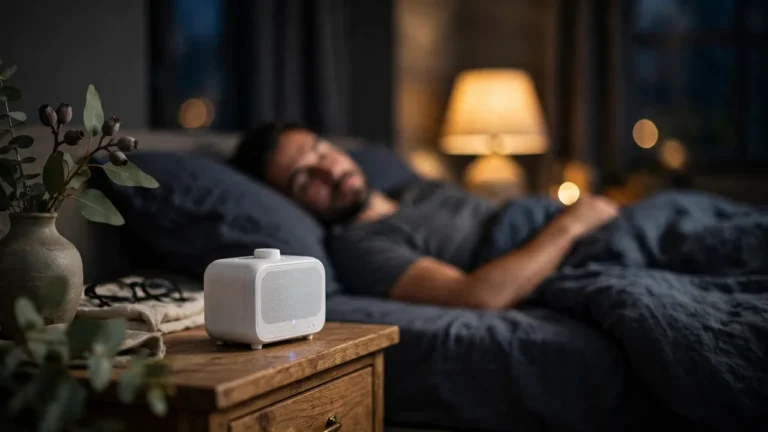
Treat your bedroom like it has one job. Cool (around 18–20°C works for most people), dark (blockout curtains or an eye mask if needed), and quiet (earplugs or white noise for snoring partners, traffic, or early-morning tradies). Reserve the bed for sleep — working or scrolling in bed trains your brain to associate it with wakefulness.
And be honest about your mattress and pillow. If you’re waking with a stiff neck or aching back, your sleep surface may be part of the problem. You spend a third of your life there; it’s worth getting right.
How to Sleep Better Starts in the Daytime
Good sleep starts in the morning. Get bright light exposure within an hour of waking — sunlight is the strongest signal for setting your body clock. Exercise regularly, but avoid vigorous workouts within a couple of hours of bedtime. Keep naps short (10–20 minutes) and before mid-afternoon, or skip them if they interfere with night sleep — see our guide to napping properly.
Manage caffeine strategically: fine in the morning, taper after midday, none after about 2pm if you’re sensitive. And get genuine daylight during the day, especially if you work indoors — office lighting is a fraction of outdoor brightness and your body clock notices.
What to Do When You Can’t Sleep
Lying awake getting frustrated is the worst strategy — it pairs your bed with anxiety. If you’ve been awake for 20–30 minutes, get up, go to another room, and do something calm and boring in dim light until you feel drowsy. Then return to bed. This is called stimulus control, and it’s a core component of CBT-i, the first-line insomnia treatment the Royal Australian College of General Practitioners recommends.
For racing thoughts, try the worry dump earlier in the evening: write down everything on your mind plus one next action for each. And try the 4-7-8 or slow-exhale breathing technique — a longer out-breath physically calms your nervous system. Slow breathing is one of several calming habits covered in our guide to emotional health basics.
The Science of Sleep Cycles: Why You Wake Up Groggy
Sleep isn’t a uniform block of unconsciousness — it moves in roughly 90-minute cycles through light sleep, deep sleep and REM (dreaming) sleep. Deep sleep dominates the first half of the night and handles physical restoration; REM dominates the second half and handles emotional processing and memory.
This explains two common frustrations. First, why six hours can feel worse than seven and a half: waking mid-cycle, especially out of deep sleep, produces grogginess (sleep inertia) that can last for ages. Second, why alcohol is so destructive — it suppresses REM in the second half of the night, exactly when your brain needs it most.
You can’t perfectly time cycles, but you can work with them: aim for sleep durations in roughly 90-minute multiples from when you actually fall asleep (7.5 or 9 hours rather than 8), and if you must use an alarm, a smart alarm that wakes you during light sleep within a 20–30 minute window tends to feel less brutal than a fixed-time blare.
Supplements, Gadgets and Sleep Aids: What the Evidence Says
The sleep-aid market is enormous and mostly marketing. Here’s the honest summary: melatonin can help with timing issues (jet lag, shift work) but evidence for general insomnia is modest — and in Australia it’s a pharmacist-only or prescription medicine, so discuss it with your GP or pharmacist rather than ordering mystery pills online. Magnesium, valerian, and most herbal blends have weak or inconsistent evidence.
Sleep trackers and smartwatches can be useful for spotting patterns (bedtimes, wake times) but their sleep-stage data is rough estimation, not measurement — don’t let a watch tell you that you slept badly when you feel fine. Blue-light glasses have limited evidence; dimming lights and putting screens away works better and costs nothing.
Prescription sleep medications have a place for short-term use under medical supervision, but they’re not a long-term fix and can create dependence. That’s precisely why CBT-i is the recommended first-line treatment for chronic insomnia: it fixes the problem rather than sedating through it. If you’ve been relying on any sleep aid for months, that’s a conversation to have with your GP.
Snoring, Apnoea and When to See Your GP
Loud, regular snoring — especially with pauses, gasping, or choking sounds — isn’t just annoying for your partner. It’s the hallmark of obstructive sleep apnoea, which is significantly more common in men and means your breathing repeatedly stops during sleep. Untreated apnoea is linked to high blood pressure, heart problems, and dangerous daytime sleepiness.
If you snore loudly, wake unrefreshed despite enough hours in bed, or feel sleepy during the day (especially while driving), see your GP. Diagnosis usually involves a sleep study, and treatment is prescribed based on the study results — CPAP is one common option. Our pillar guide covers sleep apnoea signs in men and what to discuss with your doctor.
When Good Habits Aren’t Enough: CBT-i Explained
Sometimes you do everything right — consistent schedule, dark room, no screens — and sleep still won’t come. That’s when Cognitive Behavioural Therapy for Insomnia (CBT-i) is the first-line treatment for chronic insomnia, recommended by the Royal Australian College of General Practitioners. CBT-i isn’t just “sleep hygiene tips”; it’s a structured program, usually 4–8 sessions, that retrains the learned behaviours and thought patterns keeping you awake.
Its core techniques include sleep restriction (temporarily limiting time in bed to rebuild sleep drive — counterintuitive but powerful), stimulus control (the get-up-if-awake rule), and cognitive restructuring (defusing the “I’ll be ruined tomorrow” thoughts that spike arousal). The evidence is strong: CBT-i outperforms sleep medications for long-term outcomes, and the benefits persist after treatment ends. In Australia, psychologists offer it face-to-face and via telehealth, and some GPs can point you to structured online CBT-i programs. If insomnia has lasted months, this is the conversation to have.
Frequently Asked Questions
How much sleep do men actually need?
Most adults, including men, need 7 to 9 hours of sleep per night according to sleep health guidelines. Individual needs vary, but consistently getting less than 7 hours is linked to poorer health, mood, and cognitive performance.
Why do men have trouble sleeping?
Common causes include stress and worry, irregular schedules and shift work, screen use before bed, alcohol and caffeine, sleep apnoea (more common in men), and bedroom environments that are too warm, bright, or noisy.
Does alcohol help you sleep?
No — alcohol may help you fall asleep faster but it fragments sleep, suppresses restorative REM sleep, and increases wakefulness in the second half of the night. Regular drinking leads to poorer overall sleep quality.
What is the best evidence-based treatment for insomnia?
Cognitive Behavioural Therapy for Insomnia (CBT-i) is the treatment the Sleep Health Foundation notes has been recommended as a best first treatment by the Royal Australian College of General Practitioners. It addresses the thoughts and behaviours that maintain poor sleep. Ask your GP for a referral.
When should I see a GP about sleep problems?
See your GP if poor sleep lasts more than a few weeks despite good sleep habits, if you snore loudly or gasp during sleep, feel excessively sleepy during the day, or if sleep problems are affecting your mood, work, or safety (such as drowsy driving).
Keep Reading
Still working out how to sleep better? These three pages go deeper.
- Men’s Sleep Optimization — the pillar guide: apnoea signs, exercise timing and a 30-day plan.
- Sleep Cycle Calculator — count back from your wake time in 90-minute cycles.
- Emotional Health Basics — the stress side of poor sleep, and what helps.
Disclaimer: This article is for general information only and is not medical advice. If you have persistent sleep problems, snoring with breathing pauses, or excessive daytime sleepiness, please see your GP. If you’re struggling, Lifeline (13 11 14) and Beyond Blue (1300 22 4636) are available 24/7.
The Sleep Health Foundation is Australia’s leading source of evidence-based sleep information and a great next stop for fact sheets on insomnia, apnoea and how to sleep better.