Men’s Skincare Routine: A Simple Beginner’s Guide for Australia
If you’ve ever stood in the skincare aisle at Chemist Warehouse feeling like you’ve walked into the wrong shop, this men’s skincare routine Australia guide is for you. No ten-step Korean rituals, no serums with unpronounceable names — just a straightforward routine that takes about three minutes, suits the Australian climate, and actually makes a visible difference to your skin.
Here’s the honest truth most blokes need to hear: you don’t need a shelf full of products. Men’s skin is generally thicker and oilier than women’s, and the Australian sun is brutal on all of it. A basic routine built around three steps — cleanse, moisturise, protect — will do more for your face than any expensive miracle cream used on its own.
Why blokes are finally bothering with skincare
For a long time, skincare was filed under “not for me” by most Australian men. Soap, water, done. But a few things have shifted. Working from home put a lot of us in front of cameras all day. The sun here doesn’t muck around — Australia has some of the highest UV levels in the world, and that shows up on skin fast. And frankly, once blokes try a proper routine for a fortnight, most don’t go back, because the difference is hard to miss: less shine by midday, fewer dry patches in winter, and skin that just looks healthier.
There’s also a practical angle. Shaving is essentially dragging a blade across your face, sometimes daily. That irritates skin, causes ingrown hairs, and strips natural oils. A basic routine calms all of that down. If you shave, skincare isn’t vanity — it’s maintenance.
You don’t need to become a skincare enthusiast. Think of it like brushing your teeth: a small daily habit that prevents bigger problems later.
Know your skin type before you buy anything
Buying products without knowing your skin type is like buying shoes without knowing your size. Take thirty seconds to work yours out:
- Oily: Your face looks shiny by midday, especially across the forehead, nose and chin (the T-zone). Pores look larger. You’re prone to blackheads.
- Dry: Skin feels tight after washing, sometimes flaky or rough, especially in winter or after hot showers. Rarely shiny.
- Combination: Oily T-zone but normal or dry cheeks. This is the most common type among men.
- Sensitive: Redness, stinging or itching when you try new products. Often goes hand-in-hand with one of the above.
- Normal: None of the above really apply. Congratulations — buy whatever suits and keep it simple.
The classic test: wash your face with a gentle cleanser, pat dry, and wait an hour without applying anything. If your whole face feels tight, you’re dry. If your T-zone is shiny but cheeks feel fine, you’re combination. If you’re an oil slick, you’re oily. This matters because an oily-skinned bloke using a heavy cream made for dry skin will break out, and a dry-skinned bloke using a foaming gel cleanser will feel like his face is shrinking.
The only three steps in a men’s skincare routine that actually matter
Forget everything else for now. A beginner’s routine has three steps, morning and night, with one difference between the two:
1. Cleanse. Wash your face with a proper facial cleanser — not bar soap, not body wash, not shampoo that ran down your face. Bar soap is too harsh for facial skin and leaves it stripped and tight. A gentle gel or cream cleanser removes overnight oil, sweat and grime without wrecking your skin barrier. Thirty seconds, lukewarm water, done.
2. Moisturise. Even oily skin needs moisturiser — skipping it often makes oiliness worse, because your skin overproduces oil to compensate for dryness. Oily types want a light gel or lotion; dry types want a cream. Moisturiser locks water into the skin and keeps the barrier working properly.
3. Protect (morning only). Sunscreen, every morning, all year. This is the single highest-impact step in any Australian skincare routine. UV is a major driver of visible skin ageing — wrinkles, dark spots, rough texture — and, far more importantly, skin cancer risk. Australia’s UV is extreme even on overcast days, so “I’ll burn, I’ll put some on” thinking doesn’t cut it.
That’s it. Cleanse, moisturise, protect. Everything else is optional extras for later.
Your morning routine, step by step
Keep it under three minutes or you won’t stick with it. Here’s the order:
- Rinse or cleanse. If your skin is oily, use cleanser in the morning. If it’s dry or normal, a lukewarm water rinse is fine — you cleansed last night.
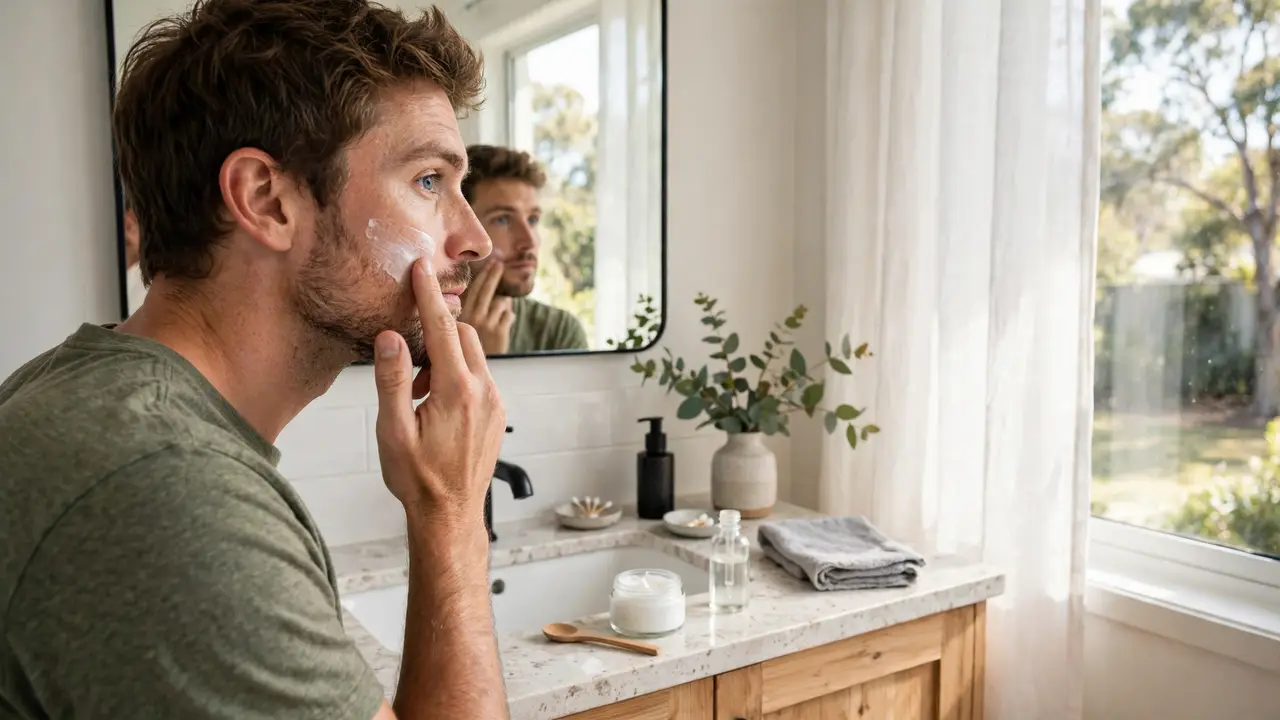
- Moisturise. While skin is still slightly damp, apply a pea-to-almond-sized amount of moisturiser. Dot it on forehead, cheeks, chin, then spread. Don’t forget your neck.
- Sunscreen. SPF 50+, broad spectrum, water resistant if you’ll sweat. Use about a teaspoon for face and neck. Apply last, after moisturiser has had a minute to sink in. If your moisturiser already has SPF 50, that counts — but most SPF moisturisers are only SPF 15–30, so check the label.
Shaving fits in before moisturiser: shave, rinse with cool water, then moisturise to calm the skin. An alcohol-free aftershave balm can double as your moisturiser if you like.
A note on sunscreen reapplication: the official advice is every two hours when outdoors. Realistically, most office workers apply once in the morning and that’s a massive improvement on nothing. If you’re outdoors — tradies, surfers, weekend sport — reapply properly. Keep a tube in the ute or the gym bag.
Your evening routine, step by step
Night is when your skin repairs itself, and it’s when you wash off the day:
- Cleanse properly. This is the non-negotiable night step. Sunscreen, sweat, city grime and oil all need to come off. Massage cleanser in for a full 30–60 seconds — most blokes rinse after five seconds, which barely does anything.
- Moisturise. Night is a good time for a slightly richer moisturiser if your skin is dry, since you don’t need sunscreen on top. Oily types can stick with their light daytime lotion.
That’s the whole evening routine. Two steps, two minutes. If you wear sunscreen daily (you should), the evening cleanse matters even more — sleeping with SPF and grime on your face is a fast track to clogged pores.
Common mistakes Aussie men make
Using bar soap or body wash on the face. The most common one. These are formulated for tougher body skin and strip the face’s natural oils, leaving it dry, tight and irritated — which then overproduces oil. A dedicated facial cleanser costs little more and changes everything.
Scorching hot showers on the face. Feels great, terrible for skin. Hot water strips oils and aggravates redness. Lukewarm is the go.
Scrubbing with harsh exfoliants daily. Those gritty scrubs feel productive but used daily they damage the skin barrier, especially for sensitive types. If you like a scrub, once or twice a week is plenty.
Skipping sunscreen because “I’m only in the office.” UV comes through windows, and incidental exposure walking to the car, getting lunch and hanging washing adds up over decades. Daily SPF is the habit that pays off most.
Applying products to bone-dry skin. Moisturiser works best on slightly damp skin — it seals the water in. Pat your face, don’t rub it raw with the towel, then apply.
Giving up after four days. Skin takes about four weeks to show real change from a new routine. Judge it after a month, not a week.
When to add extras (and when not to)
Once the basics are a habit — give it a month — you can consider add-ons. You don’t need any of these, but some are genuinely useful:
- Exfoliant (1–2x per week): A chemical exfoliant with salicylic acid (BHA) suits oily, blackhead-prone skin; lactic acid (AHA) suits drier types. Start once a week. This is the extra most worth adding.
- Vitamin C serum (mornings): An antioxidant that helps with dullness and dark spots, and is often used in the morning alongside sunscreen. Can irritate sensitive skin — introduce slowly.
- Eye cream: Honestly, your regular moisturiser works fine around the eyes for most men. Dedicated eye creams are optional, not essential.
- Retinoid (nights): The most evidence-backed anti-ageing ingredient. Start low, go slow, expect some initial dryness. Worth discussing with your GP or a dermatologist if you want to get serious — routine consistency matters more than any single product — see our men’s self-care guide.
The rule: add one product at a time, use it for two weeks, and only keep it if you can see or feel a difference. A five-product routine you actually do beats a twelve-product routine gathering dust.
Building a Men’s Skincare Routine in Australia: What to Buy
You don’t need expensive brands. Some of the best-value skincare in the country sits on supermarket and pharmacy shelves:
- Cleanser: Look for “gentle” or “for sensitive skin” gel or cream cleansers. CeraVe, La Roche-Posay and QV are widely stocked at Chemist Warehouse and Priceline and suit most skin types.
- Moisturiser: Match it to your skin type — gel or light lotion for oily, cream for dry. Nivea Men, L’Oréal Men Expert and Bulldog all make solid no-fuss options, or go unisex with CeraVe or QV. The shortlist above covers the main options worth your money.
- Sunscreen: SPF 50+, broad spectrum. Cancer Council, Hamilton and Neutrogena all make face-friendly formulas that don’t leave you looking like a ghost. Follow the Cancer Council application guidance in the routine steps above.
Buy the cleanser and moisturiser first, use them for two weeks, then add sunscreen (or buy all three at once — just introduce them one at a time so you know what’s working). Total outlay for a starter kit from a pharmacy is modest, and each product lasts months.
One caution: ignore products promising miracles — “removes wrinkles in 7 days”, “instant facelift”. Skincare is slow and steady. If a claim sounds like magic, it is.
FAQs
How long until I see results from a skincare routine?
Give it four to six weeks. Your skin renews itself on roughly a monthly cycle, so early changes are subtle. Most men notice less midday shine and smoother-feeling skin within two weeks, with visible improvement in tone and texture by week four to six. If a product causes burning, swelling or a rash, stop using it straight away.
Do men really need a different routine from women’s skincare?
Not really — skin is skin. Products marketed “for men” are mostly about fragrance and packaging. What matters is matching products to your skin type (oily, dry, sensitive) rather than your gender. That said, men’s ranges tend to offer simpler, fragrance-free options in bigger sizes, which many blokes prefer.
Can I just use sunscreen as my moisturiser?
Yes, if it keeps your skin comfortable. Many modern SPF 50 face sunscreens are moisturising enough to do double duty, especially for oily skin types. If your skin feels tight or dry after sunscreen alone, layer a moisturiser underneath. Either way, the sunscreen step is non-negotiable in Australia.
Is bar soap really that bad for your face?
For most men, yes. Bar soap typically has a high pH that disrupts your skin’s protective barrier, leading to dryness, tightness and irritation — and paradoxically, more oil production as your skin compensates. A gentle facial cleanser is formulated at a skin-friendly pH and costs about the same. It’s the single easiest upgrade you can make.
At what age should men start a skincare routine?
There’s no wrong age, but your twenties are ideal — that’s when daily sunscreen starts paying real dividends against premature ageing and skin cancer risk. Starting at 30, 40 or 50 still helps: moisturiser improves comfort immediately and sunscreen prevents further damage at any age. It’s never too late to start the basics.
Keep Reading
- Men’s Self-Care — where skincare fits in the full routine.
- How to Be a Well-Dressed Man — complete the picture.
General information only — not medical advice. If you have persistent rashes, acne, or moles that change, see your GP or a dermatologist. For general skin health information, visit healthdirect.gov.au.
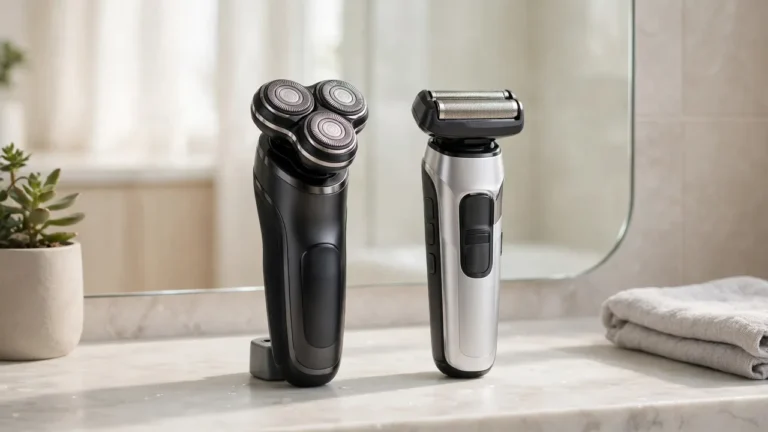
Related: Best Electric Shavers Australia u2014 foil vs rotary, with Australian prices checked today.