Blackout Curtains Australia: How to Get Real Darkness
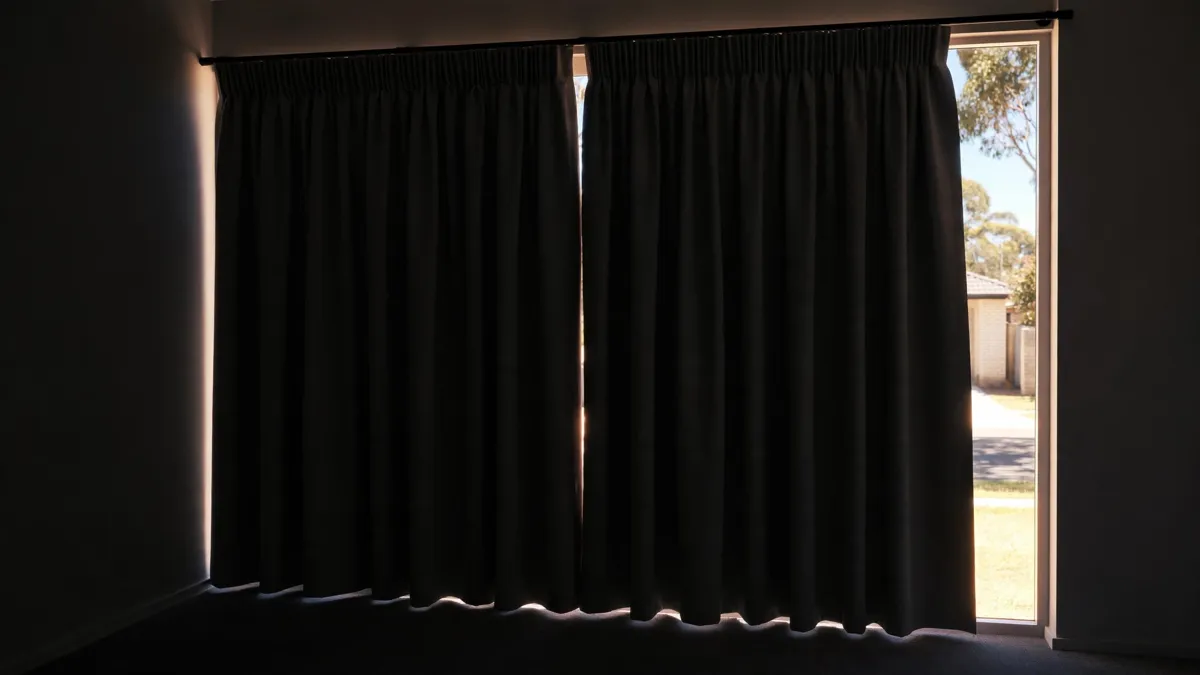
If you have ever bought blackout curtains Australia retailers promised would make a room pitch black, hung them, and still woken to a bright halo around the window at 6 am, you are not alone, and the curtains are probably not the whole problem. Most light does not come through a blockout curtain at all. It comes around it: down the sides, over the top, and under the hem. This guide explains how to buy blackout curtains that genuinely darken a room, how to measure for them, and which claims to believe and which to ignore.
A note on words first. In Australia, most retailers call these blockout curtains, while international listings say blackout. They mean the same thing here: a curtain designed to block most or all incoming light. Sheer curtains are the opposite: light, translucent layers for daytime privacy that block almost no light at night. Knowing the local term helps when you search Australian stores, but the buying logic below is the same whatever the label says.
Blackout curtains Australia: why most rooms still leak light
A blockout curtain works by combining a dense fabric with, in many cases, a coated or lined backing that stops light passing through the cloth itself. Good blockout fabric blocks 90–100 percent of light through the fabric, according to Australian curtain guides. But fabric is only one part of darkness. Three installation details decide whether a room actually goes dark:
- Side returns. The curtain should wrap back to the wall at each end, closing the gap where light sneaks down the sides. This is the single biggest light leak in most homes.
- A sealed top. A pelmet, a ceiling-recessed track, or a track mounted well above the window frame stops light spilling over the top.
- Floor length, not sill length. Curtains that stop at the sill leave a bright gap underneath. Floor-length curtains, pooling slightly or just kissing the floor, close it.
Get those three right with a mid-weight blockout lining and the room goes properly dark. Get them wrong and the heaviest, most expensive fabric will still glow at the edges. Measure the problem, not just the window: the curtain needs to cover the wall area around the window, not only the glass.
How to measure for blackout curtains Australia buyers should follow
Measure the width of the window frame, then add generous overlap on both sides: at least 15–20 cm beyond the frame on each side is a sensible starting point, more if wall space allows. For the drop, measure from the track or rod position down to the floor, not to the sill. If you are mounting a track, mount it high: closer to the ceiling makes the window look taller and leaves less gap above for light to enter.
Check the stack-back, too. When open, curtains bunch to roughly twice their fabric width at each side of the window. On a wide window, that can cover a lot of wall. If wall space is tight, a blockout roller blind inside the reveal plus a single curtain panel on each side can darken a small bedroom better than two full curtain layers, and it costs less.
Renters: you do not need to drill to get darkness. Tension rods, adhesive hooks rated for the curtain weight, and portable blockout panels that attach with suction or hook-and-loop fasteners can all work, but check the weight rating honestly: blockout curtains are heavy, and a rod that holds a sheer will not hold a lined blockout pair.
Fabrics, linings and the claims to check on blackout curtains Australia
Blockout performance comes from density and lining, not from colour alone. A dark colour helps, but a light-coloured curtain with a proper blockout lining will outperform a dark, thin, unlined curtain. Common constructions include triple-weave fabric, where dense weaving blocks light without a separate coating, and coated or lined curtains, where a backing layer does the blocking. Coated backings can peel or crack after years in strong sun, so check warranty terms and care instructions before buying, especially for west-facing windows that cop harsh afternoon sun.
Thermal and noise claims deserve a sceptical eye. Blockout curtains do add some insulation: a heavy, well-fitted curtain reduces draughts and heat transfer through glass, which can help a bedroom feel cooler in summer and warmer in winter. But they are not a substitute for insulation, double glazing, or sealing window gaps, and the effect is modest rather than dramatic. Noise reduction is smaller still: thick, interlined curtains soften echo inside a room and take the edge off outside sound, but they will not soundproof a room near a busy road. Treat any curtain marketed as soundproofing with suspicion.
Layering: sheer plus blockout is the setup most bedrooms actually want
The setup most Australian homes end up happiest with is not one curtain but two: a sheer on the track nearest the glass and a blockout on the track nearest the room. During the day, the sheer stays closed for daylight and privacy while the blockout stays open. At night, the blockout closes for darkness. That gives four settings instead of one compromise, and it solves the daytime problem of a bedroom that is either fully exposed or fully shut.
Layering needs a double track, which needs roughly 100–120 mm of depth in the reveal or on the wall. Shallow reveals and some cornice profiles cannot take one, so measure depth before ordering. Doubling up costs roughly 60–80 percent more than a single layer, not double, because track and installation are shared, but it is still a bigger spend, so prioritise the bedroom first and add other rooms later if budget is tight.
Blackout curtains Australia for shift workers and light sleepers
If you sleep during the day, darkness is not a comfort feature; it is the whole point. Shift workers should prioritise fit over fabric brand: side returns, a sealed top and floor length matter more than a premium label, and a blockout roller blind behind a curtain can close the last gaps that curtains alone leave. Pair the curtains with the rest of a day-sleep system, covered in our shift-worker sleep hygiene guide: ear protection or white noise, a cool room, and a wind-down routine. Darkness alone will not fix a noisy, hot room, but combined with those basics it makes day sleep genuinely easier.
For light sleepers generally, the same logic applies at night: streetlights, neighbours’ security lights and early summer sunrises all leak through the same gaps. Our evidence-based sleep guide covers the habits that surround the bedroom setup, and a weighted blanket can complement a dark room for people who find steady pressure calming at wind-down time. The room and the routine work together; neither replaces the other.
Frequently asked questions about blackout curtains Australia
Do blackout curtains block 100 percent of light?
Good blockout fabric blocks most light through the cloth itself, but total darkness also depends on fit. Light leaking around the sides, top and hem is the usual reason a room still glows, and fixing those gaps matters more than buying heavier fabric.
What is the difference between blackout and blockout curtains?
In Australia they are the same product under different names: blockout is the local retail term, blackout the international one. Both describe curtains designed to block most or all incoming light, as opposed to sheer curtains, which block very little.
How should I measure for blackout curtains?
Measure beyond the window frame, not just the glass: add at least 15–20 cm of overlap on each side, mount the track high, and measure the drop to the floor rather than the sill. Check stack-back width and track depth before ordering, especially for layered setups.
Do blackout curtains help with heat and noise?
They help modestly. Heavy, well-fitted curtains reduce draughts and heat transfer through glass and soften room echo, but they are not a substitute for insulation, double glazing, or soundproofing, and noise reduction in particular is limited.
Can renters install blackout curtains without drilling?
Often yes, with tension rods, adhesive hooks, or portable blockout panels, but check weight ratings carefully: lined blockout curtains are heavy, and fixings rated for sheers will fail under them.
Should I layer sheer and blockout curtains?
For most bedrooms, yes. A sheer on the glass-side track gives daytime light and privacy, and a blockout on the room-side track gives night darkness. You need a double track with roughly 100–120 mm of depth, so measure first.
This buying guide contains no prices, because curtain prices vary widely by size, fabric and retailer: measure first, then compare like-for-like sizes across Australian retailers. This guide contains no affiliate links.