Men’s Sheds Australia: The Complete Community and Connection Guide
Men’s Sheds Australia: The Complete Community and Connection Guide
There’s a uniquely Australian solution to male loneliness sitting in more than 1,300 sheds in suburbs and country towns across the country — and many blokes have never heard of it. Men’s Sheds are community workshops where men gather to build things, fix things, learn skills, drink tea, and — almost as a side effect — form the friendships that keep them healthy.
If you’re retired, approaching retirement, working from home and isolated, new to an area, or just noticing your social circle shrinking, this mens sheds australia guide covers everything: what sheds actually do, why they work so well for men’s mental health, how to find your local one, and what to expect when you walk through the door.
What Exactly Is a Men’s Shed?
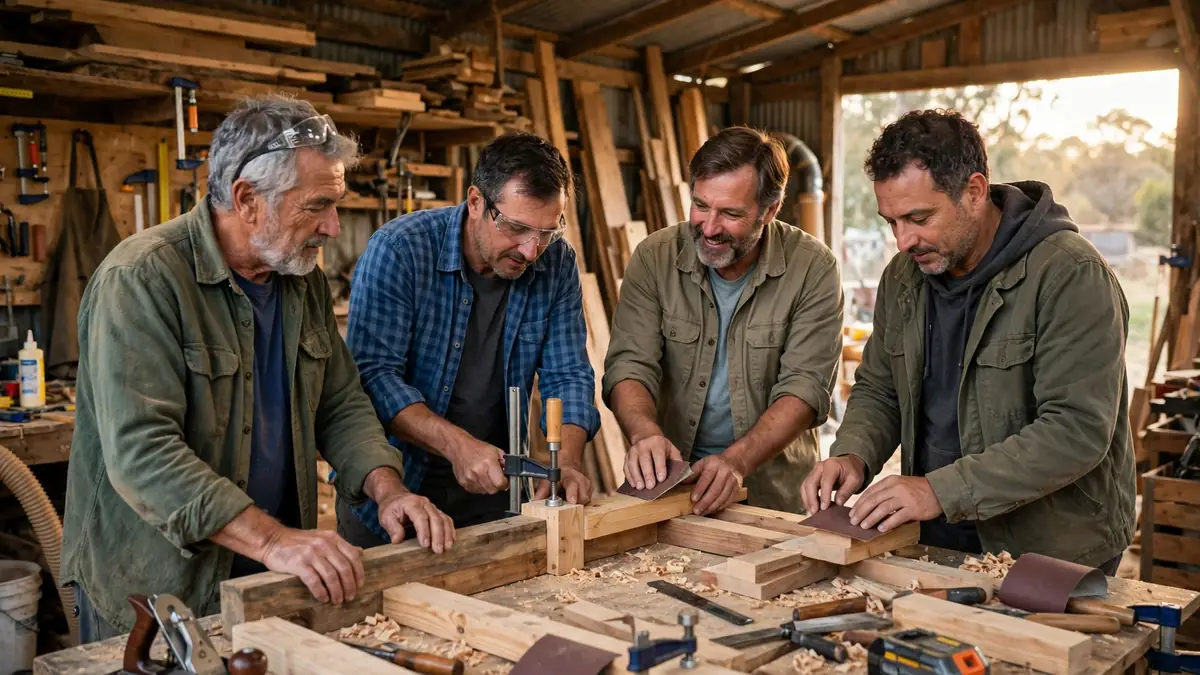
A Men’s Shed is a larger version of the classic backyard shed — a communal workshop where men meet regularly to work on projects together. The activities vary enormously by shed: woodworking, metalwork, restoring furniture, building community projects (park benches, nesting boxes, playground equipment), repairing things for locals, gardening, cooking, even computer skills and art.
But the workshop is really the excuse. The actual product of a Men’s Shed is connection: regular, low-pressure, shoulder-to-shoulder contact with other blokes. There’s no therapy circle, no forced sharing, no awkward icebreakers. You show up, you make something (or just have a cuppa and a chat), and friendships form in the background while your hands are busy. It turns out this is exactly how many men connect best.
The movement started in Australia in the 1990s and has grown to over 1,300 sheds nationwide, coordinated by the Australian Men’s Shed Association (AMSA), the national body this mens sheds australia guide draws on for shed-finding details. The model has since spread internationally, but Australia remains its heartland — and its most enthusiastic adopter.
Why Sheds Work So Well for Men’s Mental Health
The genius of the Men’s Shed model is that it solves male loneliness without ever calling it that. Consider what sheds provide against the known drivers of loneliness in men:
- Regular, scheduled contact: sheds meet on set days, providing the repetition that friendships need. You don’t have to organise anything — just show up.
- Activity-based connection: men bond shoulder-to-shoulder, doing things together. The shed provides the shared activity that adult male friendships need as scaffolding.
- Purpose and usefulness: making things for the community, mentoring younger members, keeping skills alive — this counters the invisibility and irrelevance many men feel after retirement.
- Routine and structure: for retired men especially, shed days provide the weekly rhythm that work used to supply. Structure is quietly protective for mental health.
- Intergenerational contact: sheds mix ages in a way modern life rarely does. Older men mentor; younger men bring energy. Both benefit.
- No stigma: you’re not attending a “loneliness program” or a support group. You’re going to the shed. The mental health benefits arrive without anyone having to admit needing them.
Research on Men’s Sheds has found associated improvements in members’ self-reported wellbeing, sense of purpose, and social connection. The evidence base is still growing, but the lived testimony of tens of thousands of members is consistent: the shed gave them back a reason to get up in the morning.
Who Sheds Are For (Probably Including You)
The stereotype is retired blokes, and yes, they’re well represented — but sheds serve a much wider range:
Men approaching or in retirement: the core demographic. Retirement removes work’s structure, purpose and social contact simultaneously; sheds replace all three. If retirement is on your horizon, visiting a shed beforehand is one of the smartest transition moves available. Our guide to retirement and mental health covers the broader transition.
Men who work from home: remote work’s isolation creeps up on many men. A weekly shed session provides the in-person contact that video calls can’t replicate.
Younger men: increasingly joining to learn practical skills, find mentoring, or simply connect beyond screens. Some sheds actively recruit younger members and run evening sessions for working men.
New arrivals: moved for work or sea-changed to a new town? Sheds are among the fastest ways to build a local network from zero.
Veterans and emergency service workers: many sheds have strong veteran contingents and understand the particular value of peer connection for men who’ve served.
Men going through tough times: divorce, bereavement, redundancy, health issues — sheds provide steady, undemanding company during periods when isolation is most dangerous.
What Actually Happens at a Shed: A Typical Day
Every shed differs, but a typical session goes something like this. Members drift in from around 8 or 9am. There’s a noticeboard with community projects underway — maybe park benches for the council, toy repairs for the local kindy, a member’s personal project. Blokes pair off or form small groups around tasks. The workshop hums: saws, sanders, conversation, the occasional burst of laughter.
Around 10am, everything stops for smoko — and this is sacred. The tea and biscuits aren’t a break from the shed’s purpose; in many ways they ARE the purpose. It’s where the real talk happens: health worries shared sideways, advice exchanged, friendships deepened. Some members come mainly for the projects; others mainly for the smoko. Both are equally welcome.
The day winds down around lunchtime or mid-afternoon. Some sheds do BBQs, some organise outings, many run specific programs — woodturning classes, first aid courses, health talks from visiting GPs. The variety is enormous, and it all runs on volunteer energy.
Mens sheds australia guide: how to find your local shed
Finding a shed is straightforward:
1. Search the AMSA directory: visit mensshed.org — the Australian Men’s Shed Association’s website — and use their shed finder. With 1,300+ sheds, there’s very likely one within reasonable distance.
2. Contact the coordinator: each listing has contact details. A quick call or email to introduce yourself is all it takes. Ask about meeting days, what they get up to, and whether you can visit.
3. Just turn up: most sheds welcome drop-in visitors. There’s no interview, no application, no skill test. The standard advice from members: “just come down for a cuppa and see.”
4. Check local council and community noticeboards: some smaller or newer sheds aren’t prominent online but are well known locally. Your council’s community directory is worth checking.
If there’s genuinely no shed near you — common in very remote areas — AMSA provides resources for starting one. New sheds often begin with a handful of blokes, a borrowed space, and donated tools.
Mens sheds australia guide: what to expect on your first visit
Walking into a room full of strangers is daunting at any age, so here’s the reality: shed members are famously welcoming to newcomers because every one of them remembers their own first day. Expect to be offered a cuppa within minutes, given a tour, introduced around, and probably put to work on something simple if you’re willing.
You don’t need to bring tools, skills, or a project. You don’t need to be handy — plenty of members aren’t, and learn as they go. Wear practical clothes and closed shoes. Bring a gold coin for the tea kitty if there is one. And give it three or four visits before deciding: the first day you’re a guest, but the friendships that make sheds special build over weeks.
One tip from long-term members: say yes to the smoko conversations. The workshop is where you meet people; the tea break is where you get to know them.
Costs, Membership and Practicalities
Sheds are non-profit community organisations, and costs reflect that. Typical annual membership runs from around $30 to $100 depending on the shed, sometimes with a small daily contribution ($2–$5) covering tea, coffee and consumables. Some sheds ask members to contribute to materials for personal projects.
Most sheds carry public liability insurance through AMSA affiliation, maintain safety inductions for workshop equipment, and are run by elected committees of members. They’re democratic, volunteer-powered, and fiercely independent — each shed has its own character, rules and culture, which is part of the charm.
Beyond the Workshop: Health, Learning and Community Service
Modern sheds do far more than woodwork. Many host regular health sessions — visiting GPs, prostate and mental health talks, hearing checks — delivered in an environment where men actually listen, because it’s their mates’ shed, not a clinic. Some run “shed therapy” partnerships with local health services. The informal health promotion that happens over smoko may be as valuable as anything in the workshop.
Community service is another major thread: sheds build and repair things for schools, councils, charities and neighbours. This isn’t just nice — it’s psychologically potent. Being needed, contributing visibly, seeing your work in the community: these directly counter the purposelessness that corrodes mental health in retirement and unemployment.
Learning programs keep minds active: new tools, new crafts, digital skills, cooking. The intergenerational teaching — older members passing skills to younger ones — preserves knowledge that would otherwise vanish and gives both sides something valuable.
If You’re Hesitant: Common Worries Addressed
“I’m not handy.” Irrelevant. Many members arrive with no practical skills and learn on the job. Others never touch a tool and contribute through cooking, admin, gardening or just being good company.
“I won’t know anyone.” Nobody did on their first day. Sheds are designed for this — the activity gives you something to do while relationships form naturally.
“I’m still working full-time.” Many sheds run weekend or evening sessions, and plenty of members attend around work. Even fortnightly attendance builds connection.
“It’s for old blokes.” The average age skews older, but that’s changing — and the older blokes are often the most interesting people you’ll meet, with lifetimes of stories and skills. Age-mixed friendships are one of the shed’s underrated gifts.
“I don’t want to commit.” There’s no commitment. Visit once, have a cuppa, leave if it’s not for you. But give it a fair chance — three visits minimum, as the regulars advise.
The Future of Sheds: Where the Movement Is Heading
The shed movement keeps evolving. Newer sheds are experimenting with evening and weekend hours for working men, dedicated spaces for younger members, partnerships with TAFEs and schools for skills training, and “virtual sheds” that emerged during COVID lockdowns — online catch-ups that kept isolated members connected when physical meetings were impossible.
There’s growing recognition of sheds as health infrastructure, not just hobby clubs. Health services increasingly partner with sheds for outreach — prostate checks, mental health first aid training, diabetes education — because sheds reach men who’d never walk into a clinic voluntarily. Some researchers argue sheds should be formally recognised in men’s health policy, given their reach into exactly the demographic health services struggle to engage: older, working-class, regional men.
The core, though, hasn’t changed since the first shed: blokes, tools, tea, and time together. In an era of digital everything, that analogue simplicity might be the most radical health intervention available.
Frequently Asked Questions
What is a Men’s Shed?
A Men’s Shed is a community workshop where men gather regularly to work on practical projects, learn skills, and socialise. Originating in Australia, there are now over 1,300 sheds nationwide. They provide mateship, purpose and belonging, particularly for retired or isolated men — the heart of what this mens sheds australia guide is about.
How do I join a Men’s Shed in Australia?
Find your nearest shed through the Australian Men’s Shed Association (AMSA) website at mensshed.org, then simply turn up or contact the shed coordinator. Most sheds welcome visitors, charge modest annual membership fees, and don’t require any prior skills.
Do you need woodworking skills to join a Men’s Shed?
No skills are needed. Sheds welcome complete beginners and experienced tradies alike. Members teach each other, and many men join to learn new skills. The social connection matters more than the craft.
How much does Men’s Shed membership cost?
Costs vary by shed but are typically modest — often $30 to $100 per year, sometimes with small daily contributions for materials or morning tea. Sheds are non-profit community organisations, not commercial enterprises.
Are Men’s Sheds only for older men?
While many members are retired, sheds welcome men of all ages. Younger men join to learn skills, find mentoring, or connect with community. Some sheds run specific programs for younger men, veterans, or men with disabilities.
Disclaimer: This article is for general information only. If you’re experiencing loneliness, low mood or other mental health concerns, speak to your GP. For 24/7 support, call Lifeline on 13 11 14 or Beyond Blue on 1300 22 4636.
Find your local shed through the Australian Men’s Shed Association — the national body supporting 1,300+ sheds across Australia.