Hearing Health for Men (Tradies and Loud Workplaces)
Hearing Health for Men (Tradies and Loud Workplaces)
Hearing loss is one of the most common — and most ignored — health issues affecting Australian men. It creeps up over decades, it’s largely preventable, and by the time you notice it, significant damage is done. For tradies and anyone in loud workplaces, the hearing health men tradies deal with daily isn’t a future concern; it’s a now concern, because the damage happening today shows up as the “what?” of your fifties.
This guide covers how noise damages hearing, the exposure levels that matter, protection that actually works, when to get tested, and what to do if your hearing’s already declining. General information — for personal assessment, see your GP or an audiologist.
Important: this article is general information only, not medical advice. Sudden hearing loss needs prompt medical attention — see your GP or emergency department quickly.
Hearing health men tradies: how noise damages hearing
Inside your inner ear, tiny hair cells convert sound vibrations into nerve signals. Loud noise damages or destroys these cells — and they don’t regenerate. Each damaging exposure kills some; the loss is cumulative and permanent. There’s no healing, no recovery, no “resting your ears” that brings them back.
The damage depends on loudness and duration. Australian workplace standards set the exposure limit at 85 decibels averaged over 8 hours — above this, hearing protection is required. For context: normal conversation is about 60 dB, a lawnmower around 90 dB, an angle grinder 95–110 dB, and a chainsaw or jackhammer 110+ dB. Every 3 dB increase doubles the sound energy — so 88 dB is twice as intense as 85, and safe exposure time halves with each 3 dB step. At 100 dB, safe unprotected exposure is about 15 minutes.
The insidious part: noise-induced hearing loss is painless and gradual. You don’t feel cells dying. The first signs — needing the TV louder, struggling in noisy pubs, missing high-pitched sounds — appear after years of accumulated damage. Tinnitus (ringing) after loud exposure is your ears’ distress signal; regular tinnitus means damage is occurring.
Who’s at risk: the loud jobs
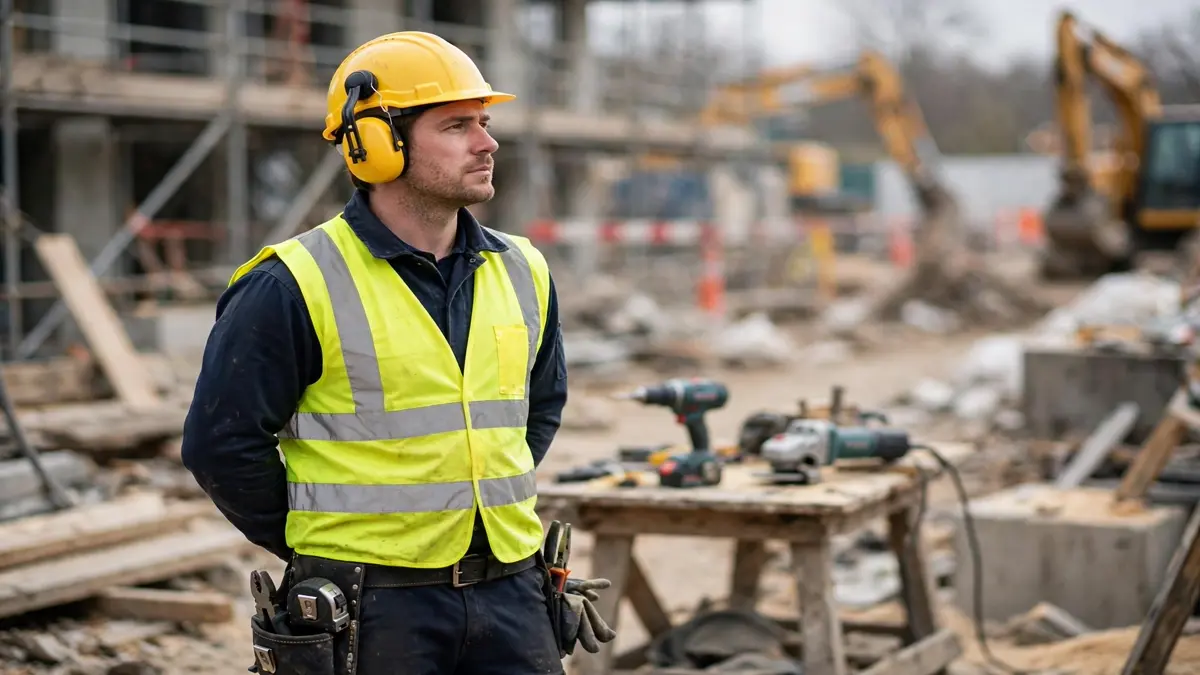
- Construction and trades: power tools, machinery, demolition — the classic high-risk group. Carpenters, concreters, demolition workers, steel fixers cop sustained high doses.
- Manufacturing and warehousing: factory floors, forklifts in enclosed spaces, production lines.
- Mining and quarrying: heavy machinery, blasting, enclosed cab or open exposure.
- Agriculture: tractors (especially older cabs), chainsaws, augers — farmers have high rates of hearing loss and low rates of protection use.
- Hospitality and entertainment: musicians, DJs, bar staff in loud venues — chronic exposure at damaging levels.
- Defence and emergency services: firearms, sirens, machinery.
- Motorsport and shooting sports: recreational exposures that rival occupational ones — a single unsuppressed gunshot can cause immediate permanent damage.
Men dominate these occupations, which is a large part of why hearing loss skews male. It’s not biology — it’s exposure plus a culture of skipping protection.
Hearing health men tradies: protection that actually works
Protection only works if it’s worn, worn correctly, and rated for the noise. The options:
Foam earplugs: cheap, disposable, highly effective when inserted properly — roll, insert deep, hold while expanding. Most people insert them badly (too shallow), which destroys their effectiveness. Learn the technique; it takes ten seconds. Available everywhere — Bunnings, pharmacies, safety suppliers.
Reusable banded plugs / pre-moulded plugs: convenient for intermittent noise — hang around the neck, pop in when needed. Good for supervisors moving between noisy and quiet areas.
Earmuffs: easy to put on and take off, good for sustained noise, and visible (supervisors can see compliance). Downside: hot, bulky, incompatible with some other PPE. The site standard for good reason.
Custom-moulded plugs: made from impressions of your ears — comfortable for all-day wear, consistent protection, worth it for career tradies. Available through audiologists and some safety suppliers.
Electronic / level-dependent protection: muffs or plugs that block harmful levels while letting speech through — brilliant for workplaces where communication matters. Pricier, but the “I can’t hear anyone with muffs on” excuse evaporates.
What doesn’t work: cotton wool, tissues, fingers (better than nothing for seconds, useless as strategy), cheap novelty earplugs with no rating, and wearing rated protection incorrectly. Check the SLC80 rating (the Australian standard hearing protection rating) — higher number means more protection; match it to your noise levels.
The compliance reality: protection in the toolbox doesn’t protect. The blokes with hearing loss at 50 are overwhelmingly the ones who “meant to” wear protection. Make it as automatic as boots: muffs on the hard hat, plugs in the pocket, no exceptions.
Workplace obligations (know your rights)
Noise-induced hearing loss is a workplace health and safety issue, not a personal lifestyle choice. Under Australian WHS law, employers must manage noise risks: measure exposure, reduce noise at the source where practicable, provide hearing protection and training, and offer audiometric testing for workers exposed above the standard.
If your workplace is loud and provides nothing — no protection, no testing, no information — that’s a WHS failure. Raise it with your supervisor, health and safety rep, or union. Safe Work Australia and your state/territory regulator (SafeWork NSW, WorkSafe Victoria, etc.) set the requirements and take complaints. Your hearing is a workplace asset your employer is obliged to protect.
Audiometric testing at work: employers must provide hearing tests for workers exposed to hazardous noise — a baseline when you start, then periodic monitoring. These tests track changes over time; take them seriously and keep your results. They’re early warning, not bureaucracy.
Signs your hearing is declining
- Frequently asking people to repeat themselves
- Turning the TV or car radio up louder than others prefer
- Difficulty following conversations in noisy environments (pubs, restaurants) — often the first sign
- Missing high-pitched sounds: birdsong, phone notifications, children’s voices
- Tinnitus — ringing, buzzing or hissing in the ears, especially after noise exposure or persistent
- Feeling like people mumble — you hear volume but not clarity
- Family commenting on your hearing before you’ve noticed it yourself (classic — trust them)
- Needing to watch people’s faces/lips to follow conversation
Hearing loss is usually gradual enough that the person affected is the last to notice — partners and workmates spot it first. If multiple people have mentioned it, they’re right. Denial is the standard response and it costs years of treatable decline.
Getting tested: what to expect
Where: your GP can do initial screening and refer; audiologists (find via Hearing Australia at hearing.com.au — the government-funded national provider — or private audiology clinics) do comprehensive testing. Many offer free or low-cost hearing checks as a starting point.
What happens: you sit in a quiet booth wearing headphones, signalling when you hear tones at various pitches and volumes. It maps your hearing thresholds across frequencies — painless, takes 20–30 minutes. Speech tests (understanding words at different volumes) may be included. The result is an audiogram — a chart of your hearing that becomes the baseline for tracking change.
When: for hearing health men tradies, a baseline test when starting noisy work, then periodically (your employer should arrange this for hazardous noise exposure); otherwise, if you notice symptoms, if you’re over 50, or if tinnitus is persistent. Include hearing in your over-40s health checks conversation with your GP.
Cost: workplace testing should be employer-provided for at-risk workers. Hearing Australia provides government-subsidised services for eligible groups (including pensioners and veterans). Private audiology checks vary — ask about fees upfront; initial screening checks are often free.
Hearing aids: the reality (not the stigma)
Modern hearing aids are nothing like the whistling beige bananas of decades past — they’re small, often nearly invisible, Bluetooth-connected, and genuinely transformative for quality of life. The research on untreated hearing loss is sobering: it’s associated with social isolation, depression, cognitive decline and even dementia risk — the brain deprived of sound input deteriorates faster.
Yet men resist hearing aids more than almost any health intervention, for pure vanity. Consider the trade: slight self-consciousness about a nearly invisible device versus missing conversations, withdrawing socially, and accelerating cognitive decline. It’s not a close call, but stigma keeps men suffering for an average of years between noticing loss and seeking help.
If testing shows you need them: trial them properly (adaptation takes weeks — the brain needs to relearn filtered sounds), get them fitted by a qualified audiologist (not an online purchase), and maintain them. Government subsidies exist for eligible Australians — ask Hearing Australia or your audiologist about the Hearing Services Program.
Tinnitus: the ringing that won’t stop
Tinnitus — persistent ringing, buzzing or hissing — often accompanies noise-induced hearing loss. For most it’s manageable background noise; for some it’s genuinely distressing, affecting sleep, concentration and mental health.
Management: hearing aids (restoring ambient sound often reduces tinnitus perception), sound therapy, CBT-based tinnitus programs (good evidence), and addressing the underlying hearing loss. There’s no cure for most chronic tinnitus, but there are effective management strategies — see your GP or audiologist rather than suffering silently. Sudden onset tinnitus, especially with hearing loss or dizziness, needs prompt medical assessment.
Prevention, as ever, beats management for hearing health men tradies: the tinnitus you avoid through protection in your 30s is worth more than any treatment in your 50s.
Hearing loss and relationships: the hidden cost
The most immediate damage from untreated hearing loss isn’t medical — it’s social. Partners of men with hearing loss consistently report frustration, loneliness and relationship strain: conversations become effortful, social events get avoided, misunderstandings multiply. The man with declining hearing often doesn’t realise how much he’s missing or how hard he’s become to talk to.
This is worth stating bluntly because it’s the motivator that works where health warnings don’t: getting your hearing sorted is something you do for the people around you as much as yourself. The partner who’s been repeating herself for three years will notice the difference within days of proper treatment. Don’t make the people you love shout for years out of stubbornness — it’s one of the more fixable problems in this entire guide.
FAQs
At what age should men get their hearing tested?
For hearing health men tradies, get a baseline when starting work in noisy environments (your employer should arrange this), and consider testing from age 50 as part of general health monitoring — or sooner if you notice symptoms. There’s no universal screening age like some other checks; it’s driven by exposure and symptoms. If you work in a loud job, periodic workplace audiometric testing should already be happening — ask your employer if it isn’t.
Can hearing loss be reversed?
Noise-induced and age-related hearing loss (damaged hair cells) cannot currently be reversed — the cells don’t regenerate. That’s what makes prevention critical. However, hearing loss can be effectively managed with hearing aids, which restore functional hearing and quality of life. Sudden sensorineural hearing loss is different — it’s a medical emergency that needs prompt treatment (steroids) and can sometimes improve. Don’t confuse the types: gradual loss is managed, sudden loss needs urgent care.
Are cheap earplugs from Bunnings good enough?
Yes, if they’re properly rated and inserted correctly. Inexpensive foam plugs with a proper SLC80 rating, rolled and inserted deeply, provide excellent protection — the technology is simple and cheap. What matters is the rating and the fit, not the price. Expensive custom plugs win on comfort for all-day wear, not on raw protection numbers. The best earplug is the rated one you’ll actually wear, inserted properly, every time.
How loud is too loud?
The workplace standard is 85 dB averaged over 8 hours — but remember the 3 dB rule: every 3 dB increase halves safe exposure time. Practically: if you need to shout to be heard by someone an arm’s length away, it’s too loud for unprotected exposure. If your ears ring after exposure, damage occurred. When in doubt, protect — the cost of unnecessary protection is trivial; the cost of insufficient protection is permanent.
Will wearing hearing aids make my hearing worse?
No — this is a persistent myth. Properly fitted hearing aids don’t damage hearing; they stimulate the auditory system, which is protective against the use-it-or-lose-it decline of untreated loss. What’s true is that adaptation takes time and initial settings need fine-tuning — early discomfort leads some men to abandon them prematurely and blame the device. Work with your audiologist through the adjustment period; most long-term users wish they’d started years earlier.
General information only — not medical advice. Sudden hearing loss needs prompt medical attention. Hearing services: Hearing Australia at hearing.com.au.