Blue Vibe CBD Gummies: An Honest Australian Guide
If you’ve come across the name “Blue Vibe CBD gummies” in online searches or ads, this guide is for you — but not as a review. We don’t sell, recommend, or link to CBD products. Instead, we’ll use this brand name as a real-world example of what every Australian should check before considering any CBD product.
What Are “Blue Vibe CBD Gummies”?
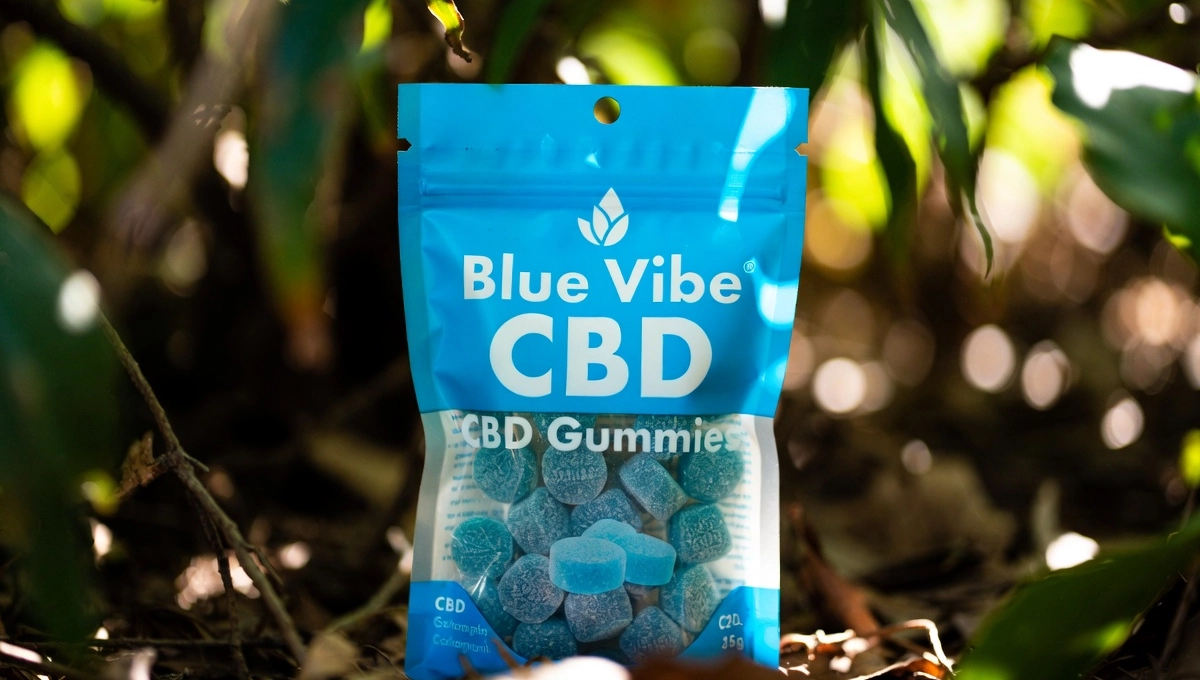
Blue Vibe is a brand name that appears in online searches and advertising for CBD gummies. CBD brands appear and disappear quickly online, and independent, verifiable information about many of them is thin. Rather than repeat marketing claims we can’t verify, this guide focuses on the checks that matter for any CBD brand — Blue Vibe included.
That approach protects you far better than any single-brand review could: the questions below apply whether the label says Blue Vibe or anything else.
The Australian Legal Reality
Before anything else, understand the law — because most CBD marketing you see online was written for Americans:
- In February 2021, Australia’s Therapeutic Goods Administration (TGA) moved low-dose CBD (up to 150mg per day) from Schedule 4 (prescription only) to Schedule 3 (pharmacist only).
- The catch: no product can actually be supplied under Schedule 3 unless registered on the Australian Register of Therapeutic Goods (ARTG) — and in practice, essentially no products have cleared that bar.
- The reality: Australians who use CBD legally do so through a GP prescription (the Schedule 4 pathway). There is no lawful “buy CBD without a prescription” market in Australia.
For more on how Australia treats related compounds, see our guide to Delta 8 gummies and Australian law.
Five Checks Before Considering Any CBD Product
1. Is it on the ARTG? If a seller claims their product is “TGA approved,” ask for the ARTG listing. Without one, the claim doesn’t hold up.
2. Do you need a prescription? In Australia: effectively, yes. Any seller telling Australians “no prescription needed” is not operating within Australian law.
3. What do the label claims really say? Claims that a product treats, cures, or prevents specific conditions — pain, anxiety, insomnia, arthritis — are red flags. Unregistered products cannot legally make disease claims in Australia.
4. Who is actually selling it? Check for a real Australian business name, ABN, and contact details. Prices in USD with no Australian presence is a warning sign.
5. Have you talked to a GP or pharmacist? This is the only legitimate first step — not a checkout page.
Red Flags in CBD Marketing
- Disease-treatment or “miracle cure” claims
- Countdown timers and fake “limited stock” pressure
- “Free trial” offers that quietly convert to monthly billing
- Reviews that can’t be traced to real, verifiable people
- Before-and-after photos with no source
What Australians Should Do Instead
If you’re interested in CBD for a health reason, talk to your GP. They can explain the legal pathways, discuss whether medicinal cannabis is worth considering for your situation, and prescribe through the proper channels if appropriate. Your pharmacist can also explain what’s currently available and what isn’t.
Don’t buy CBD products from overseas websites to get around Australian law — prohibited imports can be seized at the border.
What Does Legal Access Actually Cost?
There is no fixed price list, because legal access runs through the medical system. Expect to pay for an initial GP or clinic consultation, any follow-up appointments, and the prescribed product itself — costs vary widely between providers and products. Be wary of any seller advertising a flat “no prescription needed” price: that is the clearest sign you’re not dealing with a lawful Australian supplier. Ask your GP for a realistic estimate before committing to anything.
CBD and Drug Driving in Australia
This catches people out. Roadside drug tests in Australia screen for THC, not CBD — but many over-the-counter CBD products (especially from overseas) contain trace amounts of THC. A “THC-free” label from an unverified seller is not something to bet your licence on. If you drive for work or daily life, raise this explicitly with your GP or pharmacist before using any cannabis-based product, including prescribed ones.
How to Spot a Legitimate Australian Provider
Whether it’s a GP clinic or a pharmacy, legitimate providers share these traits:
- A real Australian business name, ABN, and physical or telehealth presence you can verify.
- No miracle-cure promises — just a clinical discussion of evidence, risks, and alternatives.
- Prescriptions dispensed through a pharmacy, with labelled products and dosage instructions.
- Clear information about costs before you commit.
If a website fails most of these checks, walk away — the legal providers won’t pressure you.
How to Prepare for a GP Conversation About CBD
Knowing what a proper consultation involves helps you tell a legitimate provider from a sales operation. According to the Therapeutic Goods Administration (TGA), when a practitioner considers medicinal cannabis with a patient they should first discuss alternative approved treatment options, explain that the products are unapproved and why they are being considered, and talk through the expected benefits, known risks and side effects, and any possible interactions with medicines you already take.
They should also explain the practical side: what it will cost, how the product is supplied through an Australian pharmacy, and what monitoring will happen during and after treatment. You should be free to ask questions, raise concerns, and change your mind or stop at any time, and the practitioner should obtain your informed consent before applying to the TGA for access.
To get the most from the appointment, take a short list with you: your current medicines and supplements, what you have already tried for the problem, and what you are hoping CBD might do. If a consultation feels like a two-minute formality ending in a product pitch, that is a warning sign, not a service.
If a Doctor Does Prescribe: Keeping Notes and Reporting Problems
Legal access comes with follow-up, and your part in it is straightforward. Keep brief notes on how you respond over the first weeks: sleep, pain, mood, side effects, anything that changes. Patterns you can describe at a follow-up appointment are far more useful than a general feeling that something is “working” or “not working”.
If you have concerns about a product, including side effects, the TGA advises telling your healthcare practitioner as soon as possible. You or your practitioner can also report issues with an unapproved product to the TGA, and concerns about a practitioner can go to the Australian Health Practitioner Regulation Agency (AHPRA). That reporting path is one of the quiet advantages of the legal system: products bought from overseas websites come with no one to report anything to.
One more caution from the TGA worth repeating here: only purchase prescribed products through an Australian registered pharmacy, and be cautious of overseas websites selling unapproved therapeutic goods, which may be counterfeit, contaminated, or contain undisclosed or illegal ingredients.
Travelling With Prescribed Cannabis-Based Products
Men ask about this often, usually the week before a flight. Within Australia, travel with your prescribed product in its original pharmacy-labelled packaging and carry a copy of your prescription or a letter from your prescriber. Keep the product in your hand luggage rather than checked baggage where airline and airport rules allow, and expect that driving laws in the state you are visiting still apply to you.
International travel is a different and riskier question. A prescription that is perfectly legal in Australia means nothing at a foreign border: many countries treat cannabis-based products as prohibited drugs regardless of medical status, and penalties can be severe. Never assume your prescription travels with you. Check the rules of your destination and any transit country well before you fly, and if the answer is unclear, leave the product at home and talk to your doctor about a plan for the trip.
The same caution applies in reverse: buying a CBD product legally overseas does not make it legal to bring home. What comes back in your suitcase is judged by Australian law at the Australian border.
How Long Does the Legal Pathway Take?
Men often imagine the legal route takes months of paperwork. In practice, the timeline depends on your GP, your condition, and whether a referral is involved. The first step is an ordinary consultation. If your doctor is not a prescriber for these products, they may refer you to a doctor or clinic that works in the area, which adds an appointment but not a queue of forms for you personally: applications through the Special Access Scheme or Authorised Prescriber pathway are handled by the practitioner, not the patient.
Once a product is prescribed, it is dispensed through a pharmacy, and some products may need to be ordered in rather than taken off the shelf the same day. Follow-up appointments are part of the process, because an unapproved product needs monitoring: your doctor will want to know whether it is helping, whether side effects have appeared, and whether the plan should change.
Compare that with the overseas-website route: a parcel that may never arrive, a product no one will discuss with you, and no follow-up of any kind. The legal pathway is slower than a checkout page, but everything about it is built to be checked.
Frequently Asked Questions
Are Blue Vibe CBD gummies legal in Australia?
We can’t verify the legal status of any specific brand sold online. What we can say: there is no lawful over-the-counter CBD market in Australia — legal access is effectively via GP prescription, whatever the brand name on the label.
Can I buy CBD gummies online in Australia without a prescription?
No. Any Australian seller offering prescription-only therapeutic goods without one is not operating lawfully, and overseas sellers don’t change the legal position.
What should I ask my GP about CBD?
Ask about the legal pathways (Schedule 4 prescription, medicinal cannabis scheme), whether there’s evidence for your specific situation, and what registered products exist.
Will CBD show up on a roadside drug test in Australia?
Tests screen for THC, not CBD — but unverified CBD products can contain trace THC. Don’t rely on a seller’s “THC-free” claim; discuss driving implications with your GP or pharmacist.
How much does legal CBD access cost in Australia?
Costs vary by provider and product: expect consultation fees plus the product itself. Ask your GP for an estimate. Any seller offering a flat price with “no prescription needed” is not operating lawfully.
Medical disclaimer: This article is general information only and is not medical advice. CBD products are regulated in Australia. Talk to your GP or pharmacist about what is appropriate for you. We do not sell or endorse any CBD product.