
Delta 8 Gummies in Australia: Are They Legal?
If you’ve seen “Delta 8 gummies” mentioned online — usually in American articles or social media — and you’re wondering whether you can buy or use them in Australia, here’s the short answer: no. There is no legal market for Delta 8 THC products in Australia. This guide explains what Delta 8 is, how Australia actually regulates it, and what to do instead.
What Is Delta 8 THC?
Delta 8 THC is a cannabinoid — a chemical compound found in the cannabis plant. In commercial products it is typically manufactured from CBD rather than extracted directly. It is chemically similar to delta-9 THC, the main psychoactive compound in cannabis.
Almost everything you’ll read about Delta 8 online comes from the United States, where a legal grey area briefly allowed its sale in some states. That American context does not apply in Australia, which has its own separate framework.
Are Delta 8 Gummies Legal in Australia?
No. Australia has no legal market for Delta 8 THC products — not in shops, and not from Australian online sellers. THC in any form is tightly controlled here.
The only lawful way Australians access THC-containing products is through the medicinal cannabis pathway, which requires a prescription from a doctor authorised under the Therapeutic Goods Administration (TGA) Special Access Scheme or as an Authorised Prescriber. That pathway covers specific prescribed products — not Delta 8 gummies ordered online.
How Australia Regulates CBD and THC
Here’s the framework, because most articles skip the details:
- February 2021: the TGA moved low-dose CBD (up to 150mg per day) from Schedule 4 (prescription only) to Schedule 3 (pharmacist only).
- The catch: no CBD product can actually be supplied under Schedule 3 unless it is registered on the Australian Register of Therapeutic Goods (ARTG). In practice, essentially no products have cleared that bar.
- The reality: Australians who use CBD legally do so through a GP prescription — the Schedule 4 pathway.
- THC (including Delta 8): sits entirely outside the CBD discussion. THC products are prescription-only through the medicinal cannabis pathway described above.
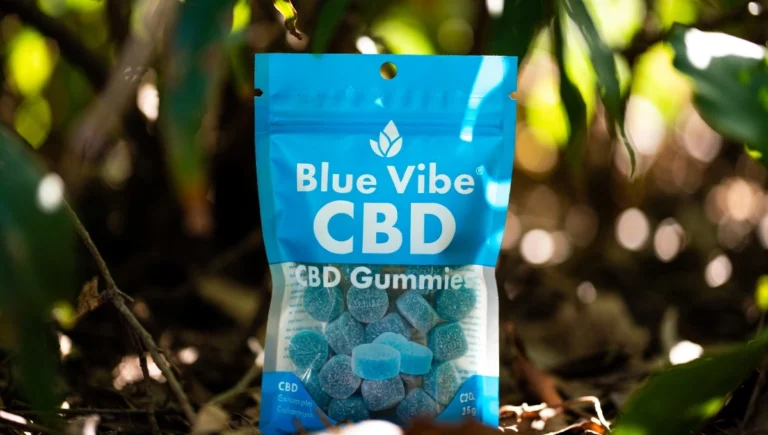
For a practical walkthrough of what to verify before considering any CBD product, see what to check before you consider CBD gummies.
Why American Articles Don’t Apply to You
You’ll see US articles mention the FDA, the DEA, or the 2018 Farm Bill. That is American law, and it has no bearing on Australia. Ordering Delta 8 products from overseas doesn’t make them legal here either — prohibited imports can be seized by the Australian Border Force.
If you’re reading this because you’re considering cannabis-based products for a health reason, the legitimate Australian path is straightforward: talk to your GP. They can discuss whether medicinal cannabis is appropriate for your situation and refer you through the proper channels. Your pharmacist can also explain what, if anything, is currently available without a prescription.
What Happens If You Try to Import It Anyway?
Some Australians assume ordering from an overseas website is a loophole. It isn’t. The Australian Border Force screens incoming parcels, and prohibited cannabis products can be seized at the border. Beyond losing your money, attempting to import a controlled substance can expose you to penalties under customs law and the drug laws of your state or territory. “I bought it online” is not a defence.
The Medicinal Cannabis Pathway: How It Actually Works
If you’re interested in cannabis-based products for a genuine health reason, Australia does have a legal route — it’s just nothing like clicking “add to cart”:
- See your GP. Discuss your condition and whether medicinal cannabis might be appropriate. Not every GP prescribes it; some will refer you to a clinic that does.
- TGA approval. Your doctor applies through the Special Access Scheme or uses their Authorised Prescriber status.
- Pharmacy dispensing. Approved products are dispensed through a pharmacy — with proper labelling, dosing instructions, and follow-up.
Prescribed products are quality-controlled and THC/CBD content is verified — the opposite of mystery gummies from an overseas website.
Driving and Workplace Testing
Worth knowing: THC can be detected in roadside drug testing in Australia, and medicinal cannabis patients are generally not exempt from drug-driving laws in most states. If driving or workplace testing matters to you, discuss it explicitly with your prescribing doctor before starting any THC-containing product.
Reading a Delta 8 Product Listing Like a Regulator
It helps to know what a typical overseas listing is really telling you. A page selling Delta 8 gummies will usually lean on American terms: “hemp-derived”, “Farm Bill compliant”, “federally legal”. Every one of those phrases describes United States law. None of them describes your legal position in Australia, where the product is a controlled THC product with no legal retail market.
Listings also showcase “lab reports” or certificates of analysis. These are documents from overseas laboratories, produced for the seller, about a batch you cannot verify, under a regulatory system that does not operate here. They say nothing about whether importing the product is lawful, and nothing about whether what arrives matches what was tested.
Finally, watch the health claims. Products marketed for anxiety, pain, sleep, or focus are making therapeutic claims. In Australia, therapeutic claims belong to registered or properly prescribed medicines, assessed through the TGA. A gummy sold with a shopping cart and a discount timer is not part of that system, whatever its label says.
If You Have Already Ordered Some
People find this page at different points, including after an order is already on its way. The sensible steps are simple. Do not place a second order. If the parcel is intercepted, expect the product to be seized, and do not attempt to argue the point at the border or re-order to a different address to get around it: that compounds the problem rather than solving it.
If the parcel does arrive, the fact that it cleared the border does not make possessing or using it legal. The cautious course is not to use the product: you cannot verify what it contains, how strong it is, or what else is in it. If you are contacted by authorities about an import, get proper legal advice before responding in detail; this article is general information, not legal advice for your situation.
And if your reason for ordering was a real health problem that is still bothering you, that problem deserves the legitimate route described above. A GP consultation costs less than most people fear, and it starts a process that can actually be followed up.
Workplace Drug Testing in More Detail
Roadside testing is only half the picture. Many Australian employers in mining, transport, construction, manufacturing, and emergency services run workplace drug testing programs, and THC is a standard part of the panel. Policies vary, but testing positive can have immediate consequences for safety-sensitive roles, including standing down from duty.
Detection is not limited to the day of use. How long THC remains detectable depends on the test type, the product, and the person, which is exactly why “I only use it on weekends” is not a reliable strategy for anyone subject to testing. If your job involves testing, treat that as a deciding factor, not a detail.
If you are prescribed a THC-containing product through the medicinal cannabis pathway, raise the testing question with your prescribing doctor and check your workplace policy before you start. Some employers have processes for declaring prescribed medicines; none of them work in your favour if the first they hear of it is a positive result.
Possession Laws Are State-Based, and They Still Apply
One detail American articles never mention: in Australia, most drug possession offences are matters of state and territory law. The details differ between jurisdictions: the quantities involved, whether a caution or diversion scheme exists for a first minor offence involving cannabis, and how courts treat repeat offences. Those schemes, where they exist, were designed around cannabis law as each state wrote it, and none of them creates a legal market for imported THC gummies.
That is why “it is basically decriminalised” is a dangerous half-truth. Decriminalisation schemes in some jurisdictions are about how police handle a person found with a small amount of cannabis; they do not legalise sale, they do not legalise importation, and they do not protect a parcel coming through the border, which is a Commonwealth matter handled by the Australian Border Force.
If you need to know exactly how the law applies in your state, the reliable sources are your state government’s legislation and health websites, or a lawyer for advice about your own circumstances. Social media confidence is not a source worth betting a criminal record on.
Frequently Asked Questions
Is Delta 8 legal in Australia?
No. There is no legal market for Delta 8 THC products in Australia — not in stores and not from Australian online sellers.
Can I order Delta 8 gummies online and have them shipped to Australia?
No. Importing them is not a legal workaround. Prohibited cannabis products can be seized at the border, and attempting to import them carries legal risk.
What is the difference between CBD and Delta 8 under Australian law?
Low-dose CBD was down-scheduled to pharmacist-only (Schedule 3) in 2021, but with no products practically available that way — legal access is effectively via GP prescription. Delta 8 is a THC variant with no legal market in Australia at all.
Where can I legally get CBD in Australia?
In practice, through a GP prescription. Talk to your doctor or pharmacist about the current legal pathways.
What happens if customs seizes my Delta 8 order?
The product is confiscated, and you may be contacted by authorities. Attempting to import prohibited substances carries legal risk under customs and state drug laws.
Can I drive after using a legal THC product?
THC is detectable in roadside drug testing, and medicinal cannabis patients are generally not exempt from drug-driving laws in most Australian states. Discuss this with your prescribing doctor.
Medical disclaimer: This article is general information only and is not medical advice. Cannabis-based products are regulated medicines in Australia. Talk to your GP or pharmacist about what is appropriate for you.