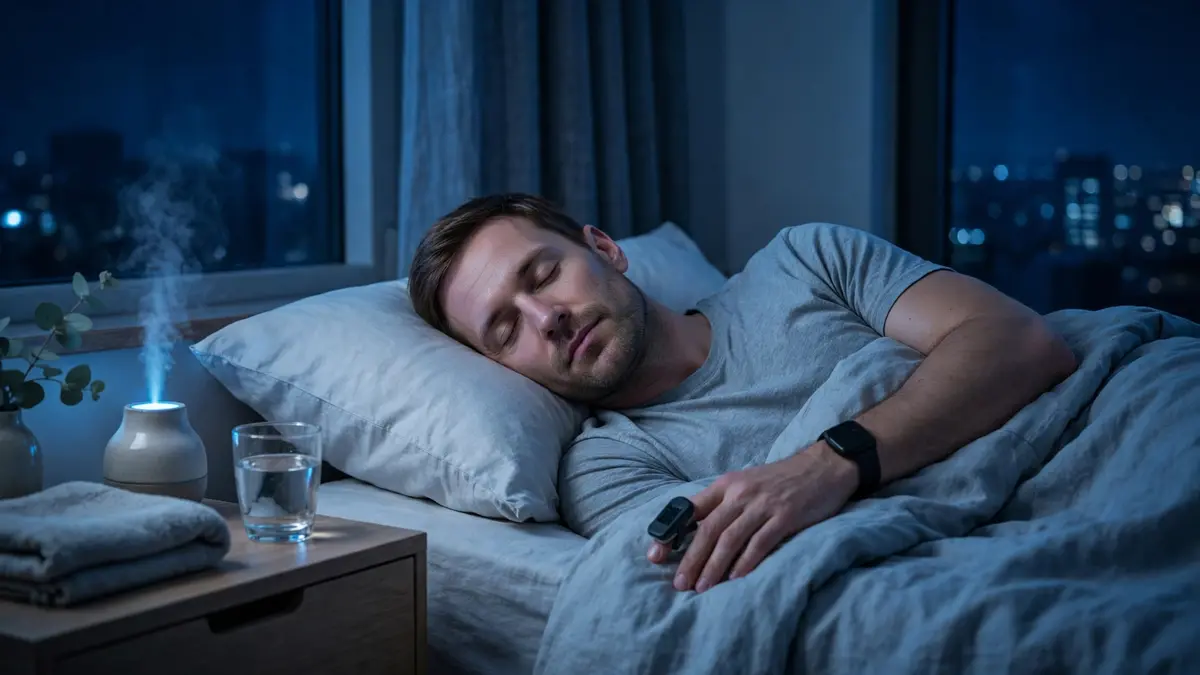
Sleep Apnoea in Men: Signs to Discuss with Your GP
Sleep Apnoea in Men: Signs to Discuss with Your GP
If you snore like a chainsaw, wake up feeling like you haven’t slept, and need three coffees to function — this might be the most important article you read this year. Sleep apnoea in men is remarkably common, frequently undiagnosed, and very treatable. Many men suffer for years, assuming their exhaustion is just “getting older” or “working hard,” when the real problem is that they stop breathing dozens of times every night.
This guide explains what sleep apnoea is, why men are more vulnerable, the signs to watch for, and what to discuss with your GP — just the facts and a clear path forward.
What Sleep Apnoea Actually Is
Obstructive sleep apnoea (OSA) — the common type — happens when the muscles at the back of your throat relax too much during sleep, narrowing or closing your airway. Your brain briefly wakes you (often without you remembering) to reopen it. This cycle can repeat tens or even hundreds of times per night.
The result: your sleep is shattered into fragments, your oxygen levels dip repeatedly, and your body spends the night in a state of low-grade emergency rather than restoration — eight hours in bed can feel like three or four, night after night.
Central sleep apnoea — where the brain intermittently fails to signal breathing muscles — is less common and usually linked to other medical conditions; your GP or sleep physician will determine which type applies.
Why Men Are More at Risk
Sleep apnoea in men is significantly more common than in women — estimates suggest men are two to three times more likely to have OSA. The reasons are anatomical and hormonal: men tend to carry more fat around the neck and upper airway, have longer airways more prone to collapse, and lack the protective effects of female hormones (pre-menopausal women have notably lower rates).
Key risk factors for men include:
- Excess weight, especially around the neck and abdomen — the single biggest modifiable risk factor
- Age over 40, with risk climbing each decade
- Larger neck circumference (roughly over 43cm is a commonly cited threshold)
- Family history of snoring or apnoea
- Alcohol and sedatives, which relax throat muscles further
- Smoking, which inflames the upper airway
- Nasal congestion or structural issues like a deviated septum
But slim, young, fit men get sleep apnoea too — weight is a risk factor, not a requirement. If the symptoms fit, get assessed regardless of your build.
The Signs: What to Watch For
Because the breathing interruptions happen during sleep, many men don’t connect their daytime symptoms to a night-time problem. Look for this pattern of sleep apnoea in men:
Night-time signs (often reported by partners):
- Loud, habitual snoring — especially snoring punctuated by silences
- Witnessed pauses in breathing, followed by gasping, snorting or choking sounds
- Restless sleep, frequent waking to urinate
- Dry mouth or sore throat on waking
Daytime signs:
- Waking unrefreshed despite adequate hours in bed
- Excessive daytime sleepiness — dozing in meetings, on the couch, or (dangerously) while driving
- Morning headaches
- Difficulty concentrating, memory problems, “brain fog”
- Irritability, mood changes, reduced libido
- Needing excessive caffeine to function
The classic combination — loud snoring plus unrefreshing sleep plus daytime sleepiness — is worth a GP conversation on its own. And take partner reports seriously: the person lying next to you is often the best diagnostic instrument available.
Why Untreated Sleep Apnoea in Men Matters
This isn’t just about feeling tired. The repeated oxygen drops and sleep fragmentation of untreated OSA are associated with serious health consequences: high blood pressure (particularly resistant to medication), increased risk of heart disease and stroke, higher likelihood of type 2 diabetes, and cognitive effects including impaired concentration and memory.
The immediate safety risk deserves emphasis: excessive daytime sleepiness makes drowsy driving as dangerous as drink driving, and men with untreated severe apnoea have notably higher rates of motor vehicle accidents. If you’re fighting sleep at the wheel, that’s an urgent safety issue for you and everyone else on the road.
The encouraging flip side: treatment substantially reduces these risks. This is one of those conditions where diagnosis genuinely changes outcomes.
If you’re wondering whether your sleep problems might be apnoea or something else, our evidence-based sleep guide for men covers the broader picture — including how to tell normal snoring from something worth investigating, and the sleep habits that help regardless of diagnosis.
What to Discuss with Your GP
Your GP is the right starting point for sleep apnoea in men, and the conversation is straightforward. Describe your symptoms specifically: the snoring (bring your partner’s description), how unrefreshed you feel, any daytime sleepiness or morning headaches. Mention relevant risk factors and any safety concerns like drowsy driving.
Your GP will likely use a screening questionnaire (such as the Epworth Sleepiness Scale or STOP-Bang) and examine you. If apnoea seems likely, they’ll refer you for a sleep study — either an overnight polysomnography at a sleep clinic (the gold standard) or a home-based sleep test (simpler, increasingly common for straightforward cases). In Australia, Medicare rebates apply to sleep studies with appropriate referral, though gap costs vary — ask about costs upfront.
Be honest about alcohol use, medications (especially sedatives), and how much the symptoms affect your daily life. The fuller the picture, the better the assessment.
Diagnosis and Treatment Options
If a sleep study confirms OSA, treatment depends on severity:
CPAP (Continuous Positive Airway Pressure): the gold standard for moderate to severe OSA. A quiet machine delivers gentle air pressure through a mask, keeping your airway open. Yes, the mask looks unromantic — but the effect is often dramatic, with transformed daytime energy within days to weeks, and modern machines are far quieter and more comfortable than the stereotypes suggest. Give the adjustment period a proper chance (a few weeks) before judging.
Mandibular advancement splints: custom-fitted dental devices that hold the jaw forward to keep the airway open. Effective for mild to moderate OSA and for men who can’t tolerate CPAP. Fitted by dentists with sleep training — not over-the-counter boil-and-bite versions, which are less effective.
Positional therapy: for men whose apnoea is significantly worse on their back, devices or techniques that encourage side-sleeping can help — useful as an adjunct rather than a standalone fix for significant OSA.
Weight management: where excess weight contributes, sustained weight loss can reduce severity — sometimes substantially. It’s a long-term strategy, best alongside other treatments.
Surgery: options exist for specific anatomical issues, but it’s generally considered only when other treatments fail or aren’t tolerated — discuss thoroughly with a sleep physician and ENT surgeon.
Lifestyle measures: reducing alcohol (especially in the evening), quitting smoking, treating nasal congestion, and maintaining regular sleep hours all help — as supports to primary treatment, not replacements for it. Our night-time routine guide walks through the evening habits that support healthy sleep alongside any medical treatment.
Living with Treatment: What Men Actually Ask
“Will the CPAP mask ruin my relationship?” Partners overwhelmingly prefer a quiet mask to chainsaw snoring and witnessed choking. Most report sleeping better themselves once treatment starts.
“Can I travel with it?” Yes — modern CPAP machines are compact, and travel cases are standard. Many men take them camping, FIFO, everywhere.
“Is it forever?” For most, yes — apnoea doesn’t cure itself, though significant weight loss can reduce severity enough to reassess.
“What if I can’t tolerate the mask?” Tell your sleep physician — mask types, pressures and alternatives can all be adjusted. Most tolerance issues are solvable; suffering in silence isn’t required.
Sleep Apnoea and Relationships: The Partner’s Perspective
Sleep apnoea is a couple’s condition, even though only one person has it. Partners of loud snorers commonly suffer their own sleep deprivation — leading to resentment, separate bedrooms, and frayed tempers blamed on everything except the actual cause. Many couples report that the snoring partner’s diagnosis and treatment improved the relationship as much as the health.
If your partner has been complaining about your snoring for years, believe them — and thank them. The witnessed apnoeas (pauses followed by gasping) that partners observe are among the most diagnostically valuable signs, so bring your partner to the GP appointment if they’re willing.
And if you’re the partner reading this: raising it isn’t nagging, it’s care. Frame it around health and safety rather than annoyance — “I’m worried about your breathing at night” lands better than “your snoring is driving me insane” (even if both are true). Offer to come to the appointment. The men most resistant to assessment often just need someone to make the first move with them.
Snoring in Children and Family Patterns
Sleep apnoea runs in families — partly through shared anatomy (jaw structure, airway shape), partly through shared risk factors. If you’re diagnosed, watch your kids: habitual loud snoring, restless sleep, bedwetting beyond the usual age, or difficulty concentrating can signal paediatric sleep apnoea, which is treatable and important to catch early because it affects development and learning.
Don’t diagnose your children yourself — but do mention the family history to their GP if you notice symptoms. Family patterns are clues, not coincidences.
Common Worries About Getting Assessed
Several concerns stop men booking the GP appointment. Let’s address them directly:
“It’s probably just snoring.” Maybe. But “just snoring” that comes with unrefreshing sleep and daytime sleepiness is exactly the pattern worth checking — and a sleep study is non-invasive, so the worst outcome is being told you’re fine.
“I don’t want a machine for life.” Many men feel this way before diagnosis and completely differently after experiencing treated sleep — and treatment options are broader than CPAP alone, so discuss them all with your sleep physician.
“The sleep study sounds awful.” Home-based tests involve wearing a small portable monitor overnight in your own bed. In-lab studies are more involved, but staff do them every night and know how to make it comfortable.
“It’ll affect my licence or job.” In Australia, untreated severe sleep apnoea with excessive sleepiness is the actual risk to your licence — particularly for commercial drivers, where medical standards apply. Getting treated protects your licence; ignoring symptoms endangers it.
The common thread: they’re reasons to get assessed, not reasons to avoid it — every one is better addressed with information than with avoidance.
Frequently Asked Questions
What are the signs of sleep apnoea in men?
Key signs include loud habitual snoring, witnessed pauses in breathing or gasping during sleep, waking unrefreshed despite enough hours in bed, excessive daytime sleepiness, morning headaches, dry mouth, difficulty concentrating, and irritability.
Why is sleep apnoea more common in men?
Men are more likely to develop obstructive sleep apnoea due to differences in upper airway anatomy, fat distribution around the neck, and hormonal factors. Being overweight, having a larger neck circumference, and being over 40 further increase risk.
How is sleep apnoea diagnosed in Australia?
Diagnosis usually starts with a GP assessment, followed by referral for a sleep study — either an overnight study in a sleep clinic or a home-based sleep test. The study measures breathing interruptions, oxygen levels and sleep stages.
What is the treatment for sleep apnoea?
The most effective treatment for moderate to severe obstructive sleep apnoea is CPAP (continuous positive airway pressure), which keeps the airway open during sleep. Other options include mandibular advancement splints, positional therapy, weight management, and in some cases surgery. Your GP or sleep physician will advise.
Is sleep apnoea dangerous if left untreated?
Untreated obstructive sleep apnoea is associated with high blood pressure, heart disease, stroke, type 2 diabetes, and dangerous daytime sleepiness (including drowsy driving). Treatment significantly reduces these risks.
Disclaimer: This article is for general information only and is not medical advice or a diagnosis. If you suspect sleep apnoea, please see your GP for proper assessment. If you experience severe daytime sleepiness, avoid driving until assessed.
The Sleep Health Foundation provides detailed Australian fact sheets on sleep apnoea, snoring, CPAP treatment and sleep studies.