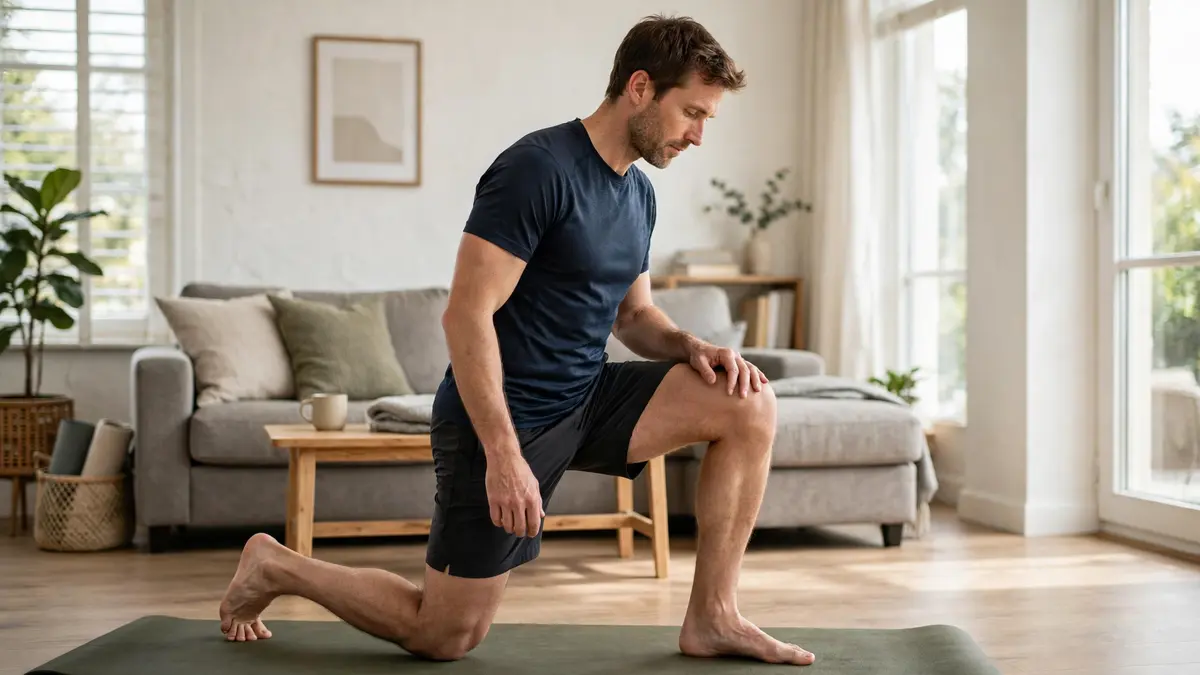
Stretching Routine for Men Over 35: 12 Minutes That Actually Help
Stretching Routine Men Over 35: 12 Minutes That Actually Help
A proper stretching routine for men over 35 isn’t about becoming a yogi — it’s about keeping the joints you use every day moving well enough to train, work, and live without the stiffness tax. After 35, tissue elasticity declines, old injuries leave their marks, and desk work welds certain positions in place. Twelve focused minutes, done consistently, reverses most of that. This guide gives you a stretching routine men over 35 can follow, explains what stretching can and can’t do, and shows how to fit it into a real week.
Disclaimer: General information only. Stretch gently — never force range. If stretching causes sharp pain, numbness, or tingling, stop and see your GP or physio.
What Stretching Can and Can’t Do (Honest Version)
Let’s clear the myths first:
- Stretching doesn’t prevent injuries in the way most people think. The evidence for pre-exercise static stretching as injury prevention is weak — what prevents injuries is strength, load management, and good technique. Stretching supports those; it doesn’t replace them.
- Stretching doesn’t “lengthen” muscles permanently in the short term. What improves is your nervous system’s tolerance for the stretched position — which is still genuinely useful, because usable range of motion is what matters.
- Stretching DOES improve flexibility and range of motion reliably, when done consistently for weeks. This is well-established.
- Stretching DOES reduce perceived stiffness and improve comfort — the “I feel less creaky” effect is real and valuable, even if the mechanism is partly neurological.
- Stretching DOES help you get into better lifting positions — ankle mobility for squats, hip flexor length for lunges, thoracic extension for pressing. This is its highest-value role for trainees.
- Static stretching right before heavy lifting CAN temporarily reduce power output. Keep pre-workout stretching dynamic (moving); save static holds for after training or separate sessions.
The takeaway: stretch for mobility, comfort, and positioning — not as injury magic or a warm-up replacement. Done with the right expectations, it’s one of the best 12-minute investments in your training week.
Stretching Routine Men Over 35: 12 Minutes, 8 Stretches
Hold each stretch 45–60 seconds per side, breathing slowly. You should feel a firm stretch — a 6–7 out of 10 intensity — never sharp pain. Do this 3–4 times a week, ideally after training or in the evening.
1. Half-Kneeling Hip Flexor Stretch (2 min)
One knee down, other foot forward, tuck your pelvis under and shift forward. Targets the hip flexors shortened by sitting — the number-one tight spot in desk-bound men over 35. The pelvic tuck is essential; without it you’re just arching your lower back. That tuck is what makes this the key stretch for desk-bound men.
2. Pigeon Pose / Figure-4 Glute Stretch (2 min)
Seated figure-4 (ankle on opposite knee, lean forward) is the accessible version; full pigeon on the floor is the deeper one. Targets the glutes and deep hip rotators — the source of the “tight backside” that plagues drivers and desk workers. If your knee protests, stick with the seated version.
3. Doorway Chest Stretch (1.5 min)
Forearms on a doorframe, lean through. Opens the chest and front shoulders rounded by keyboard work. 45 seconds at two heights (elbows at shoulder level, then slightly higher) covers the pec major and minor.
4. Kneeling Thoracic Extension (1.5 min)
Kneel facing a chair or couch, elbows on the seat, sink your chest toward the floor. Stretches the lats and extends the thoracic spine — the antidote to the desk hunch. Breathe deeply; let each exhale sink you lower.
5. Standing Calf Stretch (1.5 min)
Hands on a wall, one leg back, heel down, knee straight (gastrocnemius), then knee bent (soleus) — 45 seconds each per leg. Tight calves limit squat depth and contribute to Achilles and plantar fascia issues — the classic over-35 runner’s complaints. Our running guide flags this as essential maintenance.
6. 90/90 Hip Rotations (1.5 min)
Seated with both knees bent at 90 degrees (one leg internal rotation, one external), rotate side to side. Trains active hip rotation — the movement quality that keeps hips healthy under squats and lunges. Start with hands behind you for support; progress to upright torso.
7. Child’s Pose with Lateral Reach (1 min)
Kneel, sit back toward heels, arms extended forward — then walk hands to one side for a lateral stretch through the lats and obliques. 30 seconds per side. A gentle full-torso reset.
8. Neck Rolls and Chin Tucks (1 min)
Slow neck rotations (ear to shoulder, chin to chest — skip full backward bending if it bothers you), then 10 chin tucks against a wall. Releases the neck tension that accumulates from screens and forward-head posture.
Total: 12 minutes. Do it while watching TV, after training, or before bed — the best routine is anchored to an existing habit. And if you want the official word on how flexibility work fits into overall activity recommendations, the Australian physical activity guidelines at health.gov.au include functional activities targeting mobility, balance, and coordination on three or more days per week — a stretching routine men over 35 can follow covers that requirement directly. Twelve minutes, a few times a week, is a small price for joints that move well for decades.
Dynamic vs Static: When to Use Each
Dynamic stretching (moving through range: leg swings, arm circles, walking lunges, hip circles) belongs in warm-ups. It raises tissue temperature, lubricates joints, and rehearses movement patterns — everything a warm-up should do. 5–8 minutes before training.
Static stretching (holding positions: everything in the routine above) belongs after training or in separate sessions. It improves long-term flexibility and downregulates the nervous system — which is why evening stretching improves sleep quality for many blokes. The post-training window is ideal because muscles are warm and pliable.
PNF/proprioceptive stretching (contract-relax: stretch, contract the muscle against resistance for 5–10 seconds, then stretch deeper) is the advanced method for stubborn areas. It produces faster flexibility gains than passive stretching. Use it sparingly on your worst 1–2 tight spots — hamstrings and hip flexors usually — not on everything.
The common mistake: static stretching cold before lifting (reduces power, doesn’t warm you up) or skipping mobility entirely because “I’ll stretch later” (you won’t). Dynamic before, static after — that’s the whole system.
The Big 3 Tight Spots for Men Over 35 (and Why)
Hip flexors. Cause: sitting. Consequence: anterior pelvic tilt, lower-back ache, inhibited glutes. Fix: the half-kneeling stretch above, plus glute activation (bridges, deadlifts). Stretching alone without strengthening the opposing glutes gives temporary relief — the pair together gives lasting change.
Thoracic spine and chest. Cause: hunching over screens and steering wheels. Consequence: rounded shoulders, neck pain, poor overhead position. Fix: doorway stretch, thoracic extensions, rows and face pulls for the upper back. Our core guide covers the stability side of this equation.
Calves and ankles. Cause: sitting, unsupportive footwear, and (ironically) running without calf maintenance. Consequence: limited squat depth, Achilles irritation, plantar fascia pain. Fix: the calf stretches above, plus eccentric calf raises for tendon health. If you run, this isn’t optional maintenance — it’s the difference between running for years and running until something snaps.
Notice the pattern: every tight spot pairs a stretch with a strengthening exercise. Flexibility without strength is instability; strength without flexibility is restriction. The over-35 body needs both, which is why this stretching routine men over 35 can follow complements — rather than replaces — your lifting.
Fitting It Into Your Week
Option A — after training (recommended): finish each lifting session with the 12-minute routine. Muscles are warm, you’re already in training mode, and it becomes part of the session rather than a separate chore. Three sessions weekly = full dose.
Option B — evening wind-down: do the routine before bed while watching TV. The parasympathetic (rest-and-digest) effect of slow stretching and deep breathing improves sleep onset for many people — and sleep is when your body does its repair work. Sleep is the number-one recovery tool; this routine supports it directly.
Option C — morning mobility: a shortened 6-minute version (hip flexors, thoracic, calves) to undo the night’s stiffness. Particularly good for blokes who wake up feeling like the Tin Man. Follow with a morning walk and you’re genuinely ready for the day.
Pick one anchor and protect it for a month. After that, the routine starts feeling like maintenance your body expects rather than a task you endure.
When Stretching Isn’t Enough: Know the Limits
Stretching has boundaries, and recognising them saves months of frustration:
- Stretching won’t fix weakness. If your glutes don’t fire, no amount of hip flexor stretching creates stability. Pair every stretch with its strengthening counterpart.
- Stretching won’t fix a bad workstation. Eight hours of hunching undoes 12 minutes of stretching. Fix the setup and the stretching starts working.
- Some “tightness” is protective. Chronically tight hamstrings are sometimes guarding an unstable pelvis or a cranky lower back. If a muscle never loosens despite months of consistent stretching, stop stretching it and see a physio — the tightness may be a symptom, not the problem.
- Hypermobility needs stability, not stretching. If you’re naturally bendy (can palm the floor easily, joints hyperextend), more stretching increases injury risk. You need strength at end range, not more range.
- Pain is information. Stretching into sharp, pinching, or radiating pain is never correct. Discomfort from a firm stretch: fine. Pain: stop. The distinction matters more the older you get.
Foam Rolling vs Stretching: Do You Need Both?
Foam rolling (self-myofascial release) and stretching are often lumped together, but they do different things. Foam rolling applies pressure to muscle tissue — the current understanding is that it works primarily through neurological mechanisms (reducing perceived tightness, improving short-term range of motion) rather than physically “breaking up” tissue. The evidence: foam rolling reliably improves short-term flexibility and reduces perceived soreness, with modest effects on recovery.
Practical guidance: use the foam roller for 5–10 minutes on your problem areas (quads, IT band region, lats, thoracic spine) before the stretching routine or on rest days. Roll slowly — about 2–3cm per second — pausing on tender spots for 20–30 seconds. Avoid rolling directly on joints, the lower back (the spine doesn’t like direct pressure), or anything that causes sharp pain.
Do you need both? If you’re time-poor, the stretching routine alone covers the essentials. If you enjoy rolling and it makes you feel better, add it — the best recovery tool is the one you’ll use. A basic foam roller costs $25–$45 in Australia (Kmart, Rebel Sport, or online) and lasts years. Don’t buy the vibrating ones; the evidence doesn’t justify the 5× price premium for home use.
FAQs
How often should men over 35 stretch?
Three to four times a week for the full stretching routine men over 35, or a shorter daily version. Consistency over weeks matters far more than marathon sessions — 12 minutes regularly beats 60 minutes occasionally.
Should I stretch before or after working out?
Dynamic (moving) stretches before training as part of your warm-up; static (held) stretches after training or in separate sessions. Static stretching cold before heavy lifting can temporarily reduce power.
Can stretching fix bad posture?
Partially — it addresses the tight side of the equation (chest, hip flexors). But lasting postural change also requires strengthening the weak side (upper back, glutes) and fixing your workstation. Stretching alone is half the solution.
Is it normal to be less flexible after 35?
Some decline in tissue elasticity with age is normal, but most ‘I’m just inflexible now’ is disuse, not ageing. Consistent stretching restores most of it — the body adapts to the demands placed on it at any age.
What’s better: yoga or a stretching routine?
Both work. Yoga adds strength, balance, and breathwork alongside flexibility — excellent if you enjoy it. A targeted stretching routine is more time-efficient for specific tight spots. The best choice is the one you’ll do consistently.