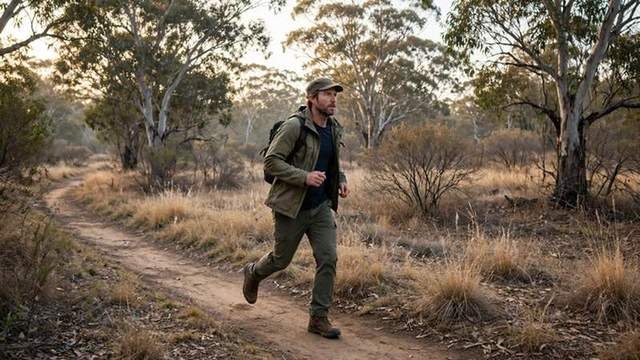
Walking for Fitness: The Most Underrated Exercise in Existence
Walking for Fitness: The Most Underrated Exercise in Existence
Walking for fitness might be the highest-return activity a man can do. It’s free, requires no skill, no gym, and no recovery — yet the evidence for its effects on heart health, blood sugar, mood, sleep, and longevity rivals that of far more dramatic exercise. The problem is psychological: walking feels too easy to “count,” so blokes chasing fitness ignore it while hunting for complex programs. This guide makes the evidence-based case for walking and shows how to get the most from it.
Disclaimer: General information only. If walking causes chest pain, severe breathlessness, or joint pain, see your GP.
The Evidence: What Walking Actually Does
The research is remarkable for something so mundane:
- Mortality: large cohort studies consistently find that regular brisk walking is associated with substantially lower all-cause and cardiovascular mortality — with benefits accruing from surprisingly modest amounts. Even small amounts of daily walking beat none by a wide margin.
- Blood sugar: a 10–15 minute walk after meals measurably blunts post-meal blood sugar spikes — relevant for every bloke, critical for those with pre-diabetes or type 2 diabetes. Post-meal walks are the single most underused metabolic tool.
- Blood pressure: regular brisk walking reduces systolic and diastolic blood pressure by amounts comparable to some medications in hypertensive individuals.
- Mental health: walking — especially outdoors — reduces symptoms of anxiety and depression, improves creative thinking, and is one of the most reliable mood interventions known. The effect is immediate (one walk) and cumulative (regular habit).
- Sleep: daytime walking, particularly morning light exposure during walks, improves sleep quality and duration.
- Weight management: walking burns 200–400 calories an hour depending on pace and body weight — modest per session, but daily walking creates a meaningful weekly deficit without triggering the hunger that intense cardio does.
The Australian physical activity guidelines count brisk walking toward the 150–300 weekly minutes of moderate activity — and “several hours of light-intensity physical activity daily” is explicitly recommended. Walking is the guidelines’ unsung hero. Full details at health.gov.au.
How Many Steps? The Honest Answer
10,000 steps is a marketing number — it came from a 1960s Japanese pedometer campaign (“manpo-kei” = 10,000-step meter), not from science. The actual research shows:
- ~4,000 steps/day: significant mortality benefit versus sedentary (~2,000 steps).
- ~7,000–8,000 steps/day: most of the benefit is captured here for most adults. The curve flattens substantially beyond this.
- ~10,000 steps/day: marginally better than 8,000, but the extra 2,000 buys little. Fine as a round target, not a magic threshold.
- Pace matters: brisk walking (where you’re slightly breathless but can talk) delivers more benefit per minute than ambling. Some of your steps should be purposeful.
Practical target for most blokes: 7,000–9,000 steps daily with at least one brisk 20–30 minute walk. If you’re currently at 3,000, don’t jump to 10,000 — add 1,000–2,000 per week. Your feet, shins, and schedule will thank you for the gradual ramp.
Making Walking Work: The Three Types
Not all walking is equal. Structure yours into three types:
1. The daily baseline (all day). General movement: parking further away, taking stairs, walking to the shops, pacing during phone calls. This is “several hours of light activity” from the guidelines. A standing desk helps; walking meetings help more. The goal is breaking up sitting, not exercise per se.
2. The brisk walk (20–40 min, most days). This is your training walk: purposeful pace, slightly breathless, arms swinging. Morning is ideal — it sets your circadian rhythm (better sleep that night), energises the day, and it’s done before life interferes. Lunchtime works too, especially for desk workers breaking up the sitting marathon. Our desk posture guide prescribes this walk as non-negotiable for good reason.
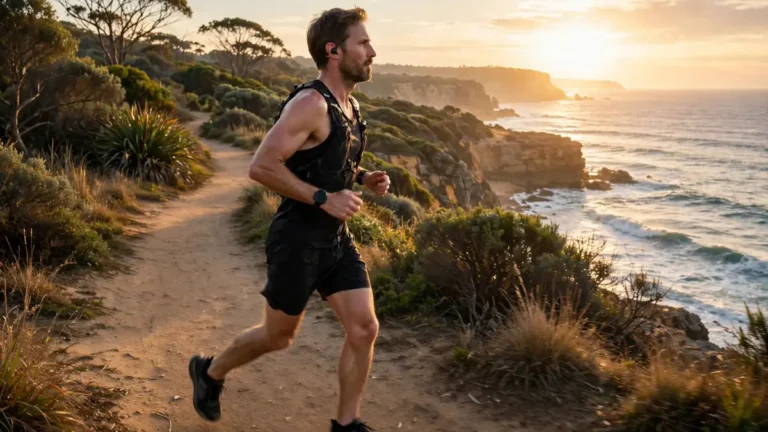
3. The long walk (60+ min, weekly). A weekend bushwalk, coastal track, or urban explore. This is part exercise, part mental health intervention, part vitamin D. Australia is absurdly well-endowed with walking tracks — use them. The long walk is also where rucking (walking with a weighted pack) enters the picture when you’re ready for more challenge.
Walking for Fat Loss: What to Expect
Honest expectations: walking alone produces slow, steady fat loss — roughly 0.25–0.5kg per week when combined with sensible eating, more if your diet is dialled in. It won’t melt kilos like a crash diet, but unlike crash diets, the results stick, because daily walking is sustainable indefinitely.
Why walking works particularly well for fat loss:
- It doesn’t spike hunger the way intense cardio does. Many blokes “earn” 600 calories on a run then eat 900. Walking burns 250 with no compensatory hunger.
- It’s repeatable daily. You can’t run hard daily without breaking down; you can walk daily forever.
- Post-meal walks directly target blood sugar — 10–15 minutes after your biggest meal is the highest-leverage timing.
- It preserves muscle during a diet, unlike aggressive cardio which can cost lean mass.
Pair daily walking with 2–3 strength sessions weekly (see our beginner program) and you have the most sustainable fat-loss system in existence: muscle preserved by lifting, deficit driven by diet, extra burn and metabolic health from walking. Boring. Effective. Permanent.
Levelling Up: When Easy Walking Gets Easy
After a few months of consistent walking, you’ll want more challenge. Progress it:
- Hills. The simplest upgrade. Hill walking dramatically increases intensity without any impact increase — find the hilliest route in your area.
- Intervals. Alternate 2 minutes brisk with 1 minute easy for 30 minutes. Genuine cardio training, no running required.
- Rucking. Add a weighted backpack (start 5–10kg, build gradually). Turns walking into serious strength-endurance training — full guide in our rucking article.
- Distance. Build the weekend walk toward 2–3 hours. Long, slow distance builds an aerobic base that benefits everything else you do.
- Speed. Race walking is a real sport for a reason — walking at 7–8 km/h is genuinely hard cardio. Try it before dismissing it.
The beauty: every upgrade is optional. Plain walking, done daily for years, outperforms every advanced protocol done sporadically. Master the basics before chasing intensity — the bloke walking 8,000 steps daily beats the bloke who bought a weighted vest and used it twice.
Gear: What You Need (Almost Nothing)
Walking’s gear list is gloriously short: comfortable shoes, weather-appropriate clothing, and optionally a way to track steps (your phone does this already). A few notes:
- Shoes: you don’t need hiking boots for footpath walking — comfortable runners or walking shoes suffice. For bush tracks, trail runners or light hikers with grip matter. Replace when the tread’s gone or aches appear.
- Socks: the unsexy secret. Decent walking socks (merino or synthetic, not cotton) prevent 90% of blisters. Cotton socks + long walks = blister city.
- Sun protection: this is Australia — hat, sunscreen, sunglasses for daytime walks. Skin cancers are no joke, and walkers accumulate serious UV hours. Early morning or late afternoon walks dodge the worst of it.
- Water: carry it on walks over 45 minutes, especially in summer. Dehydration sneaks up on walkers who don’t think they’re “exercising.”
- Visibility: if you walk pre-dawn or after dark, wear something reflective and carry a light. Drivers can’t dodge what they can’t see.
Walking and Mental Health: The Underrated Benefit
This deserves its own section because it’s the benefit most blokes feel first. The evidence for walking and mood is strong: regular walking reduces symptoms of depression and anxiety, and even single walks measurably improve mood and reduce rumination — the repetitive negative thinking that characterises both.
The mechanism is gloriously low-tech: rhythmic movement, daylight exposure, time away from screens, and (if you choose) nature. Australian research has repeatedly highlighted “green exercise” — activity in natural settings — as particularly potent for mental wellbeing. A 30-minute walk in a park outperforms a 30-minute walk on a treadmill for mood, in study after study.
If you’re going through a rough patch, walking is the most accessible intervention available: no appointment, no cost, no side effects. It’s not a replacement for professional help — if you’re struggling, call Lifeline on 13 11 14 (24/7) or speak to your GP — but it’s a powerful complement. Our guide on exercise and consistency touches on the behavioural side of using movement for mental health.
Walking With Others: The Social Multiplier
Walking is the most social exercise in existence — you can hold a full conversation at walking pace, which you can’t say for running or heavy lifting. Use that. A regular walking catch-up with a mate replaces a pub session with something that improves both of you. Walking meetings are increasingly normal in Australian workplaces. And for blokes who find “exercise” isolating or intimidating, a walking group (Landcare, bushwalking clubs, Parkrun’s walking participants) provides community without competition.
There’s a mental health dimension here too. Men are notoriously bad at seeking help and maintaining friendships under life pressure — the “walk and talk” is a lower-barrier way to check in on a mate than a sit-down heart-to-heart. Some of the most honest conversations happen side by side, moving forward, without eye contact. If a mate’s going through it, don’t suggest therapy (yet) — suggest a walk. And if you’re the one struggling, the combination of movement, daylight, and company is a genuine intervention, not just a distraction. Professional support matters too: Lifeline 13 11 14 is there 24/7.
Common Walking Mistakes
Too slow to count. A gentle amble is lovely but barely moderate intensity. For fitness, some of your walking should be brisk — the “talk but slightly breathless” pace. If you can sing, speed up; if you can’t talk, slow down.
Bad shoes for the terrain. Worn-out runners on bush tracks cause rolled ankles; heavy boots on footpaths cause blisters and fatigue. Match the shoe to the surface.
Skipping the warm-up on long walks. Start long walks easy for 10 minutes. Middle-aged Achilles tendons don’t appreciate being asked for hill sprints from cold — and yes, this is the voice of experience talking.
All steps, no strength. The walker who never lifts loses muscle mass with age regardless of step count. Walking is the foundation, not the whole house — add the 2× weekly strengthening the guidelines recommend.
Weekend warrior walking. One massive 25km hike after a sedentary week is how blisters, knee flare-ups, and stress fractures happen. Build the daily habit first; the big adventures come safely on top of it.
The through-line of every mistake above: walking rewards consistency and punishes sporadic intensity, exactly like every other form of exercise. Treat it with the same respect you’d give a training program — progressive, regular, patient — and it’ll return more than almost anything else you do for your health. Lace up, step out the door, and let the simplest exercise in existence do its quiet, compounding work.
FAQs
Is walking enough exercise?
For general health, nearly — especially 7,000–9,000 daily steps with brisk bouts. For complete fitness, add muscle-strengthening 2× weekly (walking doesn’t build much muscle or bone density). Walking + lifting is the complete package.
How long should I walk each day for fitness?
Aim for 30+ minutes of brisk walking most days, plus general movement throughout the day. The Australian guidelines recommend 150–300 minutes of moderate activity weekly — walking is the easiest way to get there.
Is 10,000 steps a day necessary?
No — it’s a marketing number, not a scientific threshold. Most benefits accrue by 7,000–8,000 steps. Beyond that, returns diminish. Pace and consistency matter more than hitting five digits.
Does walking help lose belly fat?
It helps as part of a calorie deficit — daily walking burns meaningful calories without spiking hunger, making diets easier to sustain. Spot reduction is a myth; walking reduces overall body fat, including visceral fat, over time.
When is the best time to walk?
Morning walks best support sleep (daylight exposure) and consistency (done before the day interferes). Post-meal walks best support blood sugar. The truly best time is whenever you’ll actually do it daily.